If you’ve ever walked through a food processing plant, a pharmaceutical factory, or a warehouse storing climate-sensitive goods, chances are you’ve passed through a distribution chamber without even noticing. These unassuming but critical systems are the backbone of controlled air and material movement in countless industrial and commercial operations—yet few people outside engineering and operations teams stop to ask: What makes a distribution chamber work? As someone who’s spent over a decade as a distribution chamber supplier, I’ve seen first-hand how cutting corners on its core components leads to inefficiency, downtime, and even safety risks. Today, I want to break down the main parts of a reliable distribution chamber, explain why each matters, and share what buyers should prioritize when selecting one for their facility. Distribution Chamber
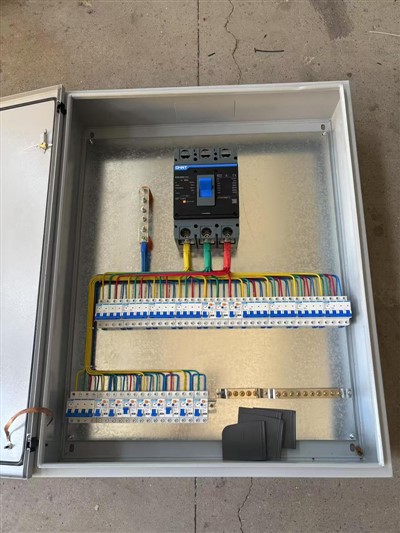
A distribution chamber, at its core, is a closed, rigid structure that evenly distributes air (or in some cases, materials) to different zones of a building or process line. Think of it as a central hub that takes a single air supply and splits it into multiple smaller streams, each tailored to the needs of a specific area. For example, a cold storage warehouse might need different airflow rates for its fresh produce section versus its frozen meat zone; a distribution chamber ensures neither area gets too much or too little air, preventing spoilage and energy waste. The best chambers aren’t one-size-fits-all—their components are designed to match the unique demands of their end use. Let’s dive into the key parts you’ll find in nearly every well-built system.
First, and most foundational, is the chamber’s outer shell. This isn’t just a metal box—it’s engineered for durability and thermal performance, depending on where it’s installed. For industrial settings like manufacturing floors or unconditioned attic spaces, the shell is usually made from galvanized steel, which resists corrosion from dust, moisture, and occasional debris. For food processing or cleanroom applications, stainless steel is the go-to choice: it’s non-porous, easy to sanitize, and won’t leach chemicals into air streams that touch products. Thermal insulation is another non-negotiable part of the shell. Uninsulated chambers cause “thermal bridging,” where heat leaks in (or out, depending on the application) and forces HVAC systems to work harder than necessary. Top suppliers use closed-cell foam insulation, which has a tight cellular structure that traps air, reducing heat transfer far better than cheaper open-cell alternatives. I’ve seen many buyers opt for thinner insulation to cut upfront costs, only to end up paying 20% more in energy bills each year—so this is one component to never skimp on.
Next, the core of the distribution system: the plenum and manifold. The plenum is the large central space within the chamber that collects incoming air (or other material) from the main supply line. Think of it as a holding tank that stabilizes pressure before air splits off to smaller ducts. A poorly designed plenum, with uneven internal walls or too many sharp corners, causes air turbulence—this leads to inconsistent airflow and can even generate noise. That’s why leading suppliers use smooth, rounded interior transitions where the main supply duct meets the plenum, to let air flow evenly without disrupting its momentum. The manifold is the network of smaller outlets connected to the plenum, each leading to a separate zone. Manifolds are fitted with a series of dampers—small adjustable blades that control how much air goes to each outlet. Dampers are critical: they let facility managers balance airflow, adjusting settings if a zone’s needs change (for example, if a warehouse starts storing extra bulk inventory that blocks a vent). High-quality dampers are made from the same material as the chamber shell and have tight seals to prevent air leakage, which would waste energy and reduce efficiency. A common mistake with manifolds is cramming too many outlets into a small space, which causes back pressure that robs air flow to farther zones. That’s why I always work with clients to map their exact duct runs before designing a manifold, to ensure even distribution across every outlet.
Another vital component is the air filtration system, though it’s often overlooked by buyers new to distribution chambers. The air that enters the chamber isn’t pure—it carries dust, pollen, mold spores, and other contaminants that can damage sensitive equipment or contaminate products. Filtration systems in distribution chambers typically consist of two stages: a pre-filter and a final filter. The pre-filter, usually a thick, disposable mesh, captures large particles like lint and dust bunnies, extending the life of the more expensive final filter. The final filter, which can be a HEPA filter for cleanrooms or a medium-efficiency filter for general industrial use, removes 99% of tiny particles down to 0.3 microns. For pharmaceutical or medical device manufacturing, where even a single stray particle can ruin a batch, I insist on MERV 14 or higher filters. Some chambers also include a pressure gauge installed near the filters, which alerts maintenance teams when it’s time to replace them—changing filters too late causes poor air quality, while changing them too often wastes money. I always recommend scheduling filter replacement based on the gauge’s readings, not a fixed timeline, to balance cost and performance.
Seals and gaskets are unsung heroes of a distribution chamber’s performance. Even small gaps between the chamber’s sections or around access panels can cause air leakage, which can add up to 10% or more of a facility’s total HVAC energy use over a year. High-quality seals are made from EPDM rubber, which is resistant to temperature swings, chemicals, and UV light, making it durable in outdoor or harsh industrial spaces. Access panels—used for cleaning, filter replacement, or inspection—must have a continuous gasket around their edges, and the panel’s frame is designed to compress the gasket tightly when closed, eliminating gaps. I’ve seen cheaply made chambers use thin foam gaskets that crack within a year, leading to constant air leaks. That’s why when I supply chambers, I include multiple layers of EPDM gaskets and test every seal with a pressure test before the unit leaves my facility. It’s an extra step, but it saves clients thousands in energy costs down the line.
Finally, the control system is what makes a distribution chamber smart, not just a passive box. Modern chambers don’t just distribute air at a fixed rate—they can adapt to changing conditions. A basic control system includes a thermostat or pressure sensor that monitors air flow and adjusts dampers automatically. For more advanced operations, like cold storage or data centers, chambers can connect to a building’s BMS (Building Management System) to sync with other HVAC equipment, adjusting airflow based on real-time temperature or occupancy data. Some suppliers even add IoT-enabled sensors that track filter performance, air quality, and energy use, sending alerts to facility managers’ phones when maintenance is needed. Older chambers use manual damper adjustments, which require someone to physically go to the chamber to tweak settings—this is not only time-consuming but can lead to human error. I always advise clients to invest in a digital control system if their budget allows, as the savings in labor and energy far outweigh the upfront cost.
Now, you might be wondering: Why does this matter if you’re not an HVAC engineer? For facility managers, a well-built distribution chamber reduces energy bills by 15-25%, prevents costly product spoilage, and minimizes downtime from maintenance. For product manufacturers, it ensures compliance with safety and quality standards that require clean, consistent air. Over the years, I’ve heard from too many clients who bought cheap, off-the-shelf chambers that broke down within two years, or couldn’t keep up with their facility’s changing needs. A distribution chamber is a long-term investment—one that should be tailored to your specific use case, not a generic unit.
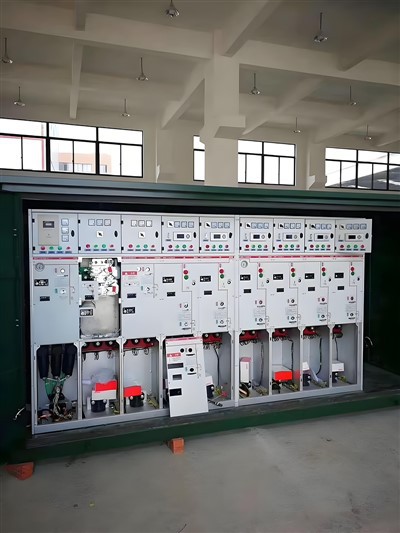
If you’re currently in the market for a distribution chamber, or if your current system is causing airflow issues, energy waste, or compliance problems, I’d encourage you to reach out to a supplier who can walk you through your options. A good supplier won’t just sell you a chamber—they’ll work with you to assess your facility’s layout, airflow needs, and budget to design a system that’s efficient, durable, and built to last. Don’t settle for a one-size-fits-all solution; your operations depend on consistent, reliable air (or material) distribution, and the right components make all the difference.
Secondary Distribution Box Reference:
- American Society of Heating, Refrigerating and Air-Conditioning Engineers (ASHRAE). 2021. ASHRAE Handbook—HVAC Systems and Equipment. American Society of Heating, Refrigerating and Air-Conditioning Engineers, Inc.
- Food and Drug Administration (FDA). 2022. Guidance for Industry: Sanitation of Food Processing Equipment. U.S. Food and Drug Administration.
- National Fire Protection Association (NFPA). 2020. NFPA 90A: Standard for the Installation of Air-Conditioning and Ventilating Systems. National Fire Protection Association.
- CIBSE. 2019. Guide B: Heating and Ventilating. Chartered Institution of Building Services Engineers.
- International Organization for Standardization (ISO). 2018. ISO 14644-1: Cleanrooms and Associated Controlled Environments—Part 1: Classification of Air Cleanliness by Particulate Concentration. International Organization for Standardization.
Anhui Nanxian Electric Co., Ltd.
With abundant experience, we are one of the most professional distribution chamber manufacturers and suppliers in China. We warmly welcome you to buy advanced distribution chamber for sale here and get quotation from our factory. All customized products are with high quality and low price.
Address: Factory Unit 03-2, Building 21, Feidong Yinfeng Industrial Park Co., Ltd., Northeast Corner of Manquan Road and Changle Road, Hefei Circular Economy Demonstration Park, Feidong County, Hefei City, Anhui Province.
E-mail: 541580567@qq.com
WebSite: https://www.nxelepower.com/
