If you’ve ever held a perfectly smooth, lint-free cotton t-shirt, a crisp bed sheet, or a fine yarn that doesn’t snap mid-weave, you’ve benefited from the work of a combing machine. As a combing machine supplier, I’ve spent thousands of hours walking factory floors, troubleshooting, and refining how these workhorses of spinning mills turn raw, messy cotton bolls into the high-grade fiber that makes textile products stand out. A lot of people assume a combing machine is just a big metal box that “combs” fibers, but it’s a precision-engineered system made of interconnected, purpose-built components—each as critical as the next, and each requiring careful maintenance to keep production running. Combing Machine
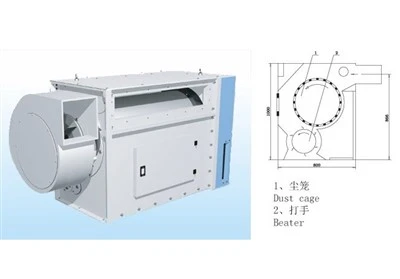
Let’s break down the main parts that make up a combing machine, starting from the raw fiber input all the way to the finished sliver. The first stop, before combing even happens, is the feed mechanism. Raw cotton comes from the gin as a loose, compressed bale, full of trash, short fibers, and uneven clumps. The feed system’s job is to take that dense bale and turn it into a thin, uniform web of fiber that’s ready for combing. Most modern combing machines use a combination of a cotton bale plucker (to tear off small, consistent tufts from the bale) and a feed chute with a pair of calibrated feed rollers. These rollers don’t just pull fiber through—they apply a precise, even tension to avoid stretching or breaking long fibers. I’ve seen mills skip calibrating these rollers, leading to uneven web thickness that turns into uneven combed sliver, and that’s the fastest way to get a batch of yarn that’s too weak or too fuzzy.
Next comes the heart of the combing process: the nipper mechanism. Think of this as the clamp that holds the fiber web steady while the comb does its work. The nipper is a small, hinged plate lined with rubber or grooved metal, and it moves in sync with the rest of the machine’s cycle—usually a reciprocating motion that opens and closes at exactly the right moment. When the comb reaches into the fiber to pull out short fibers and impurities, the nipper snaps shut, holding the long, good fibers firmly in place. I once worked with a mill where the nipper’s rubber lining wore down in just three months (instead of the standard six to nine), and they realized the timing was off: the nipper was clamping too hard, stressing the material. Small adjustments there made a huge difference.
Then there’s the starwheel combing unit, the part that gives the machine its name. This is where the magic happens. The starwheel is a rotating metal disk studded with hundreds of tiny, sharp, precisely spaced teeth. As the nipper holds the fiber web, the starwheel sweeps across the edge of the web, sliding its teeth between the long fibers and yanking out everything that’s too short (usually shorter than 12.7 mm, or 0.5 inches) plus tiny bits of leaf, seed, and dirt that the earlier cleaning steps missed. Around the starwheel, there’s also a fixed comb—sometimes called a guide comb—that acts as a backup, straining any stray long fibers that the starwheel might have pulled out. The teeth on both combs are so closely spaced that even the finest, most delicate fibers don’t get damaged; it’s like a fine-tooth comb for hair, but on an industrial scale. I always tell customers that the starwheel is the most important component because it’s what separates “good fiber” from “reject fiber”—so investing in high-quality, heat-treated starwheels pays off in higher yield and better fiber quality.
Once the combing step is done, the machine has to prepare the good long fibers to be joined together into a continuous sliver. That’s where the gripper and transfer mechanism comes in. Right after the starwheel pulls the short fibers out, the nipper opens, and a set of small, spring-loaded gripper arms reach in to take the remaining long fibers. These grippers move the fibers forward to a new set of rollers, called the front rollers, which will pull them along and combine them with slivers from other combing heads. Most combing machines have between 6 and 12 individual combing heads operating at the same time, each producing a thin sliver. The transfer mechanism’s job is to make sure these slivers merge evenly, with no gaps or overlaps, so the final sliver is consistent. If the grippers are misaligned, you end up with sliver that’s too thick in some spots and too thin in others—leading to yarn breaks later in spinning.
Now, after combing and transferring, the next key components are the draw rollers and calendar rollers. The draw rollers are a set of three or four pairs of rollers, each rotating at a slightly faster speed than the one before it. This is called “drafting,” and it stretches the merged sliver to a thinner, more uniform thickness. Think of it like stretching a piece of dough to make it thinner and more even: the draw rollers control how much stretch there is, so the sliver ends up at exactly the right linear density (called “count” in textiles). After drafting, the calendar rollers take that thin sliver and compress it slightly between two heated, polished metal rollers. This smooths the surface of the sliver, compacts the fibers together so they don’t come apart, and gives it a consistent shape—usually a round or slightly oval sliver that’s easy to transport to the next stage. I’ve found that the calendar rollers’ pressure is often overlooked, but if it’s too light, the sliver is fluffy and gets tangled during transport; too heavy, and you crush the fibers, weakening them.
One often-overlooked component that’s critical for consistent operation is the control system. Modern combing machines are not just mechanical—they’re automated, with PLCs (programmable logic controllers) that monitor every part of the cycle. They track things like fiber tension, comb timing, sliver thickness, and even the number of fiber breaks. Older machines required operators to manually adjust every setting, but new ones can automatically adjust for different fiber types: cotton vs. polyester blends, different fiber lengths, even different moisture levels in the raw fiber. For example, if the machine detects that the fiber is slightly wet, it can adjust the roller speed to avoid slipping. If a sliver is too thick, it will automatically adjust the draft rollers. The control system also has safety features, like stopping the machine if a jam occurs, which prevents expensive damage. As a supplier, I always emphasize that investing in a good control system is just as important as the mechanical parts, because it reduces waste and labor costs.
Last but not least, there’s the trash and short fiber removal system. When the starwheel pulls out short fibers and impurities, those don’t just float around the machine—there’s a dedicated suction system that pulls them away. Most combing machines have a series of vacuum ports positioned right near the starwheel and comb areas, so the trash is immediately sucked into a collection bin. This is important for two reasons: first, it keeps the machine running smoothly without jamming, and second, it prevents the rejected fibers from mixing back into the good sliver. Some mills sell these short fibers as low-grade fiber for other products, so the suction system also makes it easy to collect and sell that waste, adding an extra revenue stream. I’ve seen mills with bad suction systems lose up to 5% of their good fiber because trash is being blown back onto the web—so this component shouldn’t be an afterthought.
Now, if you’re a mill owner or production manager, you might be wondering: why does all this matter? Every component works in sync, and even a small issue with one throws off the whole system. For example, a worn nipper liner can lead to fiber loss, a misaligned starwheel can damage long fibers, and a dirty suction system can cause downtime. That’s why as a combing machine supplier, we don’t just sell the machines—we provide training on maintaining these components, calibrating them, and troubleshooting small issues before they become big problems.
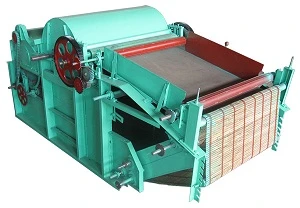
If you’re looking to upgrade your combing process, or you’re just starting out and need reliable equipment that produces high-quality sliver, we’re here to help. We design and manufacture combing machines with precision-engineered components that are built to last, backed by support to keep your production running smoothly. Whether you need a new machine, replacement parts, or advice on optimizing your current setup, reach out to our team to discuss your needs. We’ll work with you to find the right solution for your mill, no matter your production scale or fiber type.
Combing Machine References
Textile Institute. (2019). Combing technology for high-quality yarn production. Textile Progress, 51(3), 187-252.
Lawrence, C. A. (2003). Fundamentals of spun yarn technology. Woodhead Publishing.
Ojewale, S. O., & Ogbonna, J. C. (2021). Optimization of combing machine parameters for improved cotton sliver quality. Journal of Textile and Apparel, Technology and Management, 12(2), 1-12.
Shandong Hongye Machinery Co., Ltd.
Shandong Hongye Machinery Co., Ltd. is one of the most professional combing machine manufacturers and suppliers in China, featured by quality products and low price. Please rest assured to buy advanced combing machine in stock here and get quotation from our factory. Also, 1 year warranty is available.
Address: Room 1104, Building No. 2, Haier Yunjie, No. 99 Chongqing South Road, Qingdao, China
E-mail: sales@seavincn.com
WebSite: https://www.sdhymachinery.com/
