Hey everyone, let’s cut to the chase—if you’ve ever worked in a power plant, you know how chaotic things can get. There’s high-voltage gear, heavy cables running every which way, non-stop maintenance, and zero room for error. A question I get all the time from plant operators is: “Can a cable branch box even cut it here?” Cable Branch Box

As someone who’s spent the last 8 years in the cable branch box (CBB) game—working directly with plant teams on site, not just in a office—I’m not just gonna give you a yes/no answer. I’m gonna break this down like I would over a coffee at a job site, no jargon overload, no corporate fluff.
First, let’s get one thing straight: power plants are not your average office building or strip mall. We’re talking extreme conditions—sweltering heat from turbines, constant humidity near water cooling systems, dust and debris from coal handling or construction (if it’s an active plant expansion), and, most critically, voltages that make residential gear look like a battery pack. So any electrical component here has to meet way higher standards than what you’d use for a backyard shed. But cable branch boxes? They’re actually designed to handle this kind of chaos—wait, no, let me correct that: they’re designed to be optimized for this kind of chaos, if you pick the right type.
Let’s start with what a CBB does, real quick. Basic function: take one main incoming cable, split it into two or more outgoing cables, keep all connections secure, and protect them from environmental damage and accidental contact. Sounds simple, right? But in a power plant, every single part of that function has to go through a litmus test.
Take environmental ratings, for example. I’ve seen cheap CBBs from generic suppliers fail in a coal plant’s handling area in 6 months—rusted hinges, seals that cracked, water getting in and shorting out connections. But the CBBs we work with are rated IP67 or higher. That means they’re totally dust-tight and can be submerged in up to a meter of water for 30 minutes. Perfect for power plants near rivers or with leaky cooling systems. We also make them with materials that resist UV rays, extreme temperatures (from -40°C to 85°C, which covers pretty much every climate a power plant exists in), and even chemical corrosion—great for plants that use cleaning chemicals or have sulfur emissions from coal.
Next, voltage and current ratings. This is non-negotiable. A power plant can have voltages ranging from low-voltage (LV) for control systems (like 240V or 480V) all the way up to extra-high voltage (EHV) for transmission lines (way higher than residential). CBBs are built to match every single one of these. For LV power plant uses—like splitting cables to supply lighting, small pumps, or control panels—we make boxes rated up to 1kV, with copper busbars that handle the constant current loads without overheating. For medium-voltage (MV) applications, like connecting feeder cables between turbines or transformers, our CBBs go up to 36kV, and we use molded insulation that’s tested to withstand partial discharges (those tiny, invisible leaks that can blow a whole section of plant gear if they go undetected). I once had a nuclear plant team tell me they used our MV CBBs to replace old, inefficient junction boxes that kept failing under their 10kV load—they haven’t had a single issue in 2 years, and that’s not an exaggeration.
Wait, but what about safety? Power plants have strict NFPA, OSHA, and IEC rules, right? A lot of people think CBBs are just dumb boxes, but no—modern ones have safety features built in that are actually tailored for industrial settings. For example, our CBBs have lockable covers, so only authorized electricians can open them—critical because a lot of plant areas have live parts that are super dangerous. We also include insulated cable entry glands, so you don’t have exposed strands sticking out, and each connection point is clearly labeled so maintenance teams don’t mix up feeds during checks. I remember a plant engineer telling me that before they switched to our CBBs, their teams had to use handwritten labels that would fade or fall off in the heat—now they use laser-etched labels that last forever, and that small change cut their maintenance time by 20% during shutdowns.
Now, let’s get to the real question: do people actually use CBBs in power plants, or is this a new thing? I’ve been in this long enough to see the shift. 10 years ago, most plants would just splice cables in open pits or use old, generic junction boxes. But those required constant maintenance—checking for corrosion, re-tightening connections, fixing water damage—and that meant more downtime, which costs a power plant a ton of money (like, millions per day in lost generation). CBBs solved that because they’re pre-assembled, tested, and sealed up front. No on-site splicing, no guesswork.
Wait, but there are caveats, right? I can’t just say “yes, all CBBs work in power plants”—you can’t pick a random CBB from a hardware store and stick it in a plant’s turbine area. The key is matching the CBB’s specs to the plant’s exact needs. For example: if you’re working in a solar plant’s inverter yard, you need a CBB that’s rated for outdoor use, UV-resistant, and can handle DC voltage (we make special DC CBBs for that, too). If you’re in a combined cycle gas plant, you might need a CBB that’s installed in a cable tray, so it has to be lightweight but still sturdy. And for any hazardous areas—like plants with flammable gasses or dust—you need an explosion-proof CBB, rated ATEX or IECEx. That’s a whole separate line of products we design specifically for those high-risk zones, because a spark from a bad CBB is the last thing anyone wants in a power plant.
I also want to talk about space, because power plants are tight. They have cable trays crammed full of wires, limited wall space, and equipment that’s already installed, so you need CBBs that can fit into those tight spots. Our CBBs come in compact sizes, even for high-voltage uses, so you don’t have to rework the whole cable tray to fit them. That’s a huge win for retrofits, which is what most power plants are doing these days—upgrading old gear instead of building new plants from scratch. A refinery power plant we worked with last year was expanding their distillation unit, and they only had 6 inches of space in their existing cable tray. Our custom-sized CBB slid right in, and they didn’t have to cut any existing cables or rearrange the whole tray. That saved them 3 weeks of work and hundreds of thousands of dollars.
Wait, let’s address a common pushback I hear: “Why use a CBB when we can just use a junction box?” Yeah, old-style junction boxes are cheap, but they’re not designed for power plant conditions. They don’t have the seal, the insulation, or the safety features. I’ve seen junction boxes crack from temperature fluctuations in a plant’s boiler room, I’ve seen water get in through loose glands and cause short circuits, and I’ve seen people get shocked because the cover wasn’t locked. CBBs, on the other hand, are engineered for reliability. They’re tested to make sure every connection is tight, every seal is intact, and they can handle the vibration from turbines and generators (vibration is a big one—power plants shake all the time, and loose connections from bad boxes can cause overheating and fires).
Another thing: maintenance simplicity. Power plant teams are short-staffed, and shutdowns are only allowed during specific windows. With a CBB, you don’t have to test every single cable connection every time—you can just check the seals, make sure the labels are clear, and maybe take a thermal image to check for overheating. That’s way faster than working with old, open junction boxes that require you to disassemble half the thing every time you need to service a cable.
Let me back this up with a real example from a coal-fired plant I worked with in West Virginia a couple years back. They were having a lot of unplanned downtime because their old junction boxes were failing in the conveyor belt area, which is super dusty and has high humidity. They tried a few generic CBBs first, which failed in 8 months, because they didn’t have the corrosion-resistant coating we use. We sent over our custom CBBs, rated IP67, corrosion-resistant, and explosion-proof for the dusty area. They installed them in 2 weeks, and in the 3 years since then, they’ve only had one minor check—no failures, no unplanned downtime. Their maintenance team told us that the cost savings alone from not replacing those boxes every 6 months covered the entire cost of the CBBs in the first year.
Now, I don’t want to make this sound like a one-size-fits-all solution. There are definitely areas in a power plant where a CBB isn’t needed—like if you just need to connect two small low-voltage control cables, a simple junction box works. But for most distribution, feeder, and branch circuits that run through harsh plant environments, CBBs are the way to go. The key is partnering with a supplier who actually understands power plants, not just generic electrical projects. A good supplier will ask you specific questions: What’s the voltage? What’s the environment (dust, water, chemicals)? Is it a hazardous area? Do you need it for a new build or a retrofit? They’ll design a CBB that meets exactly your needs, not try to sell you a cheap, off-the-shelf box that doesn’t hold up.
As someone who’s been doing this for years, I’ve seen power plants go from relying on outdated, unreliable electrical gear to using smarter, more robust components—and CBBs are a big part of that shift. They solve real problems: reducing downtime, cutting maintenance costs, improving safety, and fitting into the tight spaces power plants have.
If you’re a plant operator, engineer, or maintenance manager reading this, and you’re tired of replacing junctions boxes every few months, or dealing with unplanned downtime from electrical failures, I get it. I’ve been in your shoes, troubleshooting a messy cable pit at 2 a.m. during a plant shutdown, and it’s the worst. The good news is that CBBs are not only usable in power plants—they’re actually a smarter, more reliable choice for most applications, as long as you pick the right ones.
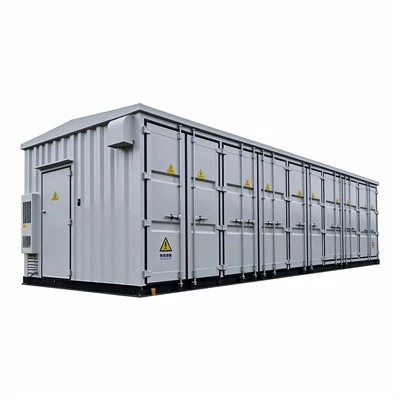
If you want to chat about your specific plant needs, what voltages you’re working with, what kind of environment you’re in, or even just ask for recommendations for CBBs that will hold up, feel free to reach out. No hard sell, just honest advice from someone who works with power plants every single day. We can walk through your project, send over specs, or even help you with a small pilot test if you want to try CBBs in a low-risk area first.
Prefabricated Substation REFERENCES
- International Electrotechnical Commission (IEC) Standard 61439: Low-voltage switchgear and controlgear assemblies
- National Fire Protection Association (NFPA) 70: National Electrical Code (NEC), Article 490 for Power Circuits in Industrial Facilities
- Institute of Electrical and Electronics Engineers (IEEE) Standard 1580: Guide for Substation Cable Installations
- International Organization for Standardization (ISO) Standard 2081: Metallic and other inorganic coatings on iron or steel for general corrosion resistance
- Occupational Safety and Health Administration (OSHA) 29 CFR 1910: General Industry Safety and Health Standards, Subpart S for Electrical Systems
Shandong Xunchi Electric Co., Ltd.
Shandong Xunchi Electric Co., Ltd. is one of the most professional cable branch box manufacturers and suppliers in China, featured by quality products and low price. Welcome to wholesale advanced cable branch box made in China here and get quotation from our factory. Customized orders are welcome.
Address: No.1 East Campus of Dachi Company on the North Ring Road, Yongchang Street Office, Chengwu County, Heze City, Shandong Province, China
E-mail: sdxcdq@126.com
WebSite: https://www.china-xunchielectric.com/
