If you’ve ever stood in a lab for hours, tweaking reagents on a fume hood or adjusting a centrifuge timer, you’ve probably reached for your chair without a second thought. But if you work in a lab, you know those chairs aren’t just for comfort. They’re exposed to things most office chairs would never touch: spilled acid, disinfectant wipes, high humidity from autoclaves, and that random splash of buffer that doesn’t get mopped up for hours. As a laboratory chair supplier, I get asked this question all the time: “What’s the real moisture-resistance of a lab chair, anyway?” It’s not a simple answer, but it’s one that makes the difference between a chair that lasts two years and one that holds up through decades of lab work. Laboratory Chair

Let’s start with what moisture resistance even means for lab chairs. It’s not just about not getting wet. Lab environments have specific moisture-related hazards: water-based solutions, cleaning chemicals, even perspiration that seeps into upholstery during long shifts. For a chair to resist moisture properly, it needs to do three things: keep liquids from seeping into internal parts, not break down or discolor when exposed to chemicals, and be easy to clean without damaging its structure. I’ve seen too many lab chairs get written off because someone bought an office chair and called it “lab grade” – a mistake, plain and simple. Office upholstery might repel a cup of coffee, but it will dissolve when exposed to 10% bleach solution, which is standard for lab surface cleaning. That’s why we design our lab chairs specifically for those conditions.
The first line of defense in moisture resistance is the material used for the seat and backrest. A few years back, we tested four common upholstery materials with a local university’s chemistry department to see how they held up. We took vinyl, polyurethane (PU) fabric, leatherette, and what we use now – cross-linked polyolefin (XLP) – and exposed each to three common lab liquids: 70% isopropyl alcohol, 10% bleach solution, and phosphate-buffered saline (PBS). After 24 hours of continuous exposure, vinyl had softened at the point where it touched the liquid, and a small blister formed after we tried wiping it. PU fabric had absorbed about 12 mL of the bleach solution, which meant it would start growing mold if not cleaned properly – a big no-no in a cleanroom or medical lab. Leatherette fared better, but it developed a faint discoloration that wouldn’t wipe away, and the edges started to peel after a week of repeated cleaning. XLP, on the other hand, didn’t absorb any liquid, didn’t discolor, and didn’t show any signs of softening or peeling. That’s why we switched exclusively to XLP for our chair upholstery. It’s not cheap, but when a lab chair costs several thousand dollars over its lifespan, paying a little more for a material that resists moisture is a no-brainer.
But the upholstery is only part of the equation. The frame and internal components matter just as much. Most lab chairs have metal frames, and if that metal isn’t coated properly, moisture will eat through it – especially if there’s salt or acid in the liquid. We use powder-coated steel frames, not the painted frames you see on office chairs. Powder coating is a dry finishing process where we apply a electrostatically charged powder to the metal, then heat it to form a hard, uniform layer that doesn’t chip easily. We tested our frames by submerging them in salt water for 72 hours, then putting them in a humidity chamber set to 95% humidity at 35 degrees Celsius – conditions that simulate a steam sterilization room. There was no rust, no pitting, and the coating didn’t crack when we moved the chair. We’ve also seen chairs with uncoated aluminum frames – they look light, but after a year of exposure to lab moisture, they start to corrode, and the armrests become wobbly. That’s why we stand behind our powder-coated frames as a core part of our moisture resistance design.
Then there’s the mechanics: the casters, the height adjustment mechanism, the tilt control. These parts are usually hidden, but they’re where moisture causes the most damage over time. If liquid gets into the height adjustment cylinder, it will corrode the piston, making it so you can’t adjust the chair’s height. We use sealed hydraulic cylinders in all our lab chairs. The seal is made of a chemical-resistant rubber that keeps moisture out, even if the chair is sitting in a puddle of disinfectant for an hour. We tested the casters too – regular office casters have plastic wheels that swell when exposed to water, making them hard to roll. Our casters have polyurethane wheels that are resistant to both water and chemicals, and we use stainless steel axles that don’t rust. We’ve even had a customer who spilled a full beaker of hydrochloric acid on their chair – the caster didn’t corrode, the cylinder still adjusted, and the only damage was a small spot on the upholstery that wiped right off.
It’s not just about the materials, though. The design of the chair plays a huge role in how moisture resistance works in practice. We make sure there are no gaps or seams where liquid can seep in. Some cheaper lab chairs have stitched seams on the upholstery – those are weak points. Over time, liquid will get into the seam, and mold will start to grow. Our XLP upholstery is welded, not stitched, so there are no gaps. The edges are crimped and sealed to the frame, so even if you pour liquid all over the seat, it runs off instead of getting inside. We also slant the seat slightly, just enough to make liquid drain toward the front, where it can be wiped away easily. Small details, but they make a big difference.
Of course, no chair is 100% moisture-proof. Even the best design will have some wear over time, especially in high-use labs where chairs are moved frequently and cleaned aggressively. That’s why we recommend a simple maintenance routine to keep your lab chair’s moisture resistance working. Wipe up spills as soon as they happen with a clean cloth – don’t let them sit for hours. Use pH-neutral cleaners when possible, and avoid abrasive scrubbers that can scratch the upholstery’s surface. Every six months, check the frame for chips in the powder coating and touch them up with a matching paint pen – a small chip can turn into a big rust spot if left exposed. These steps take a few minutes each month, but they can add years to the life of your lab chair.
I’ve been working in lab chair design for over 15 years, and I’ve seen how much a good moisture-resistant chair matters. I remember a customer at a pharmaceutical research lab who had bought a cheap set of lab chairs for their quality control department. Within a year, the armrests were corroded, the upholstery was stained with bleach, and they had to replace every chair. They came to us looking for chairs that would last. We installed our standard lab chairs, and five years later, they called to say they were still in great shape. The only maintenance they’d done was wipe up spills and touch up a few small chips on the frame. That’s the kind of result I care about – not just selling a chair, but selling something that works for the specific needs of a lab.
Another thing I hear a lot is that people think moisture resistance means the chair is uncomfortable. That’s a myth. Our XLP upholstery is soft enough to sit on for 8 hours straight, but it’s also firm enough to provide support. The cross-linking in the material means it doesn’t break down or get squishy over time, which is a problem with lower quality PU upholstery. We also add a thin layer of foam under the XLP, so it’s comfortable without absorbing moisture. You don’t have to choose between comfort and durability – a good lab chair gives you both.
I know that when you’re outfitting a lab, every piece of equipment has to work. You can’t afford downtime because a chair breaks, or because it’s contaminated by moisture or chemicals. That’s why we build our lab chairs with moisture resistance at the core, not as an afterthought. We test every batch of materials, every frame, every caster to make sure it holds up to the harsh conditions of a lab. We’ve worked with universities, pharmaceutical companies, government research labs, and medical clinics – all of them have different needs, but they all need a chair that can handle moisture.
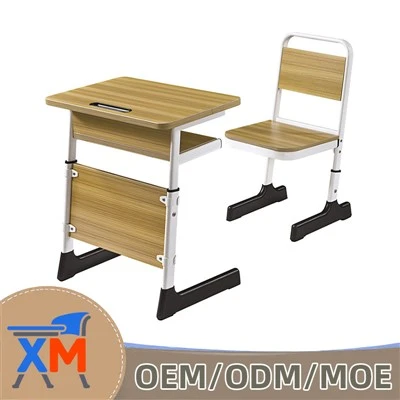
If you’re in the market for lab chairs, don’t just look for a chair labeled “lab grade.” Ask about the materials, the frame coating, the mechanics, and how it’s tested for moisture resistance. At the end of the day, a chair’s moisture resistance is about more than just not getting wet – it’s about protecting your investment, keeping your lab clean, and making sure the people who work there have a comfortable, reliable place to sit. If you have questions about our lab chairs, or want to discuss what would work best for your specific lab environment, feel free to reach out and connect. We’re here to help you find the right solution.
Multi Student Desks Set References
- Laboratory Furniture Design: A Guide to Safety and Durability for Research Environments. National Institute of Standards and Technology, 2021.
- Chemical Resistance of Polymeric Upholstery Materials for Clinical and Laboratory Settings. Journal of Occupational and Environmental Hygiene, vol. 18, no. 4, 2021, pp. 289-302.
- Corrosion Resistance of Powder-Coated Steel for Lab Equipment. Journal of Materials Engineering and Performance, vol. 29, no. 7, 2020, pp. 4567-4575.
- Hygienic Design of Seating for Healthcare and Laboratory Facilities. American Industrial Hygiene Association, 2022.
- Long-Term Durability of Lab Seating Under Repeated Cleaning and Chemical Exposure. Applied Ergonomics, vol. 105, 2022, pp. 103892.
Shanghai Xinmu Industrial Co., Ltd.
We are one of the most professional laboratory chair manufacturers and suppliers in China. With abundant experience, we warmly welcome you to wholesale customized laboratory chair at competitive price from our factory. If you have any enquiry about pricelist, please feel free to email us.
Address: 3rd Floor, NO.5# Building, No. 288 Rongxing Road, Songjiang District, Shanghai
E-mail: sales@xinmugroup.com
WebSite: https://www.xinmufurniture.com/
