Let’s cut to the chase—if you’ve ever built a car engine, fixed a leaky pipe under your sink, or changed the oil on a heavy-duty farm tractor, you’ve probably wrestled with an O Ring. I’m the guy who ships tens of thousands of these little rubber circles to shops, garages, and factories every month, and I’ve lost count of how many times a customer has emailed me, “Why does this simple part work so well when every other seal fails?” Today, I’m pulling back the curtain on how an O Ring actually works—no stuffy engineering jargon, just the real-world stuff I’ve learned from standing next to my shipping dock at 5 a.m. and troubleshooting a part that’s supposed to sit in a groove and do one job. O Ring
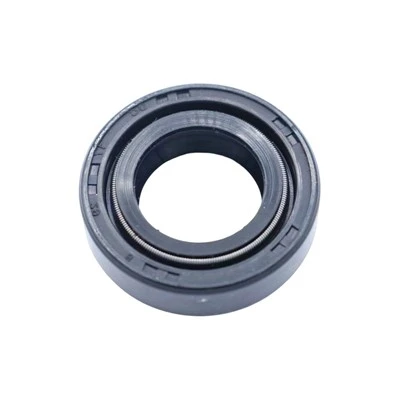
First, let’s start with what an O Ring actually is, because you’d be shocked how many people mix it up with a generic rubber band or a cut piece of hose. At its core, an O Ring is a torus—a fancy word for a ring with a perfectly circular cross-section. It’s made from elastomers, which is just the industry term for rubber-like materials that stretch and bounce back instead of staying permanently bent when you press on them. I don’t sell the cheap stuff that cracks after a month; the O Rings we stock are formulated for specific jobs: nitrile for automotive and hydraulic systems, Viton for high-heat chemical plants, silicone for food and medical equipment that needs to be food-safe or biocompatible. That specificity isn’t a marketing trick—it’s why they work when other seals fall short.
Now, the magic doesn’t happen when you hold the O Ring in your hand. It happens when you fit it into a housing groove. Every O Ring application starts with a machined metal surface that has two things: a groove cut into one part of the assembly, and a matching flat or slightly curved surface on the mating part that presses down on the O Ring. When you slide the two parts together, you don’t just drop the O Ring into the gap—you compress it. That’s the key. Let’s break that compression down because it’s where a lot of DIYers and even new machinists mess up.
Most good quality O Ring suppliers will tell you the compression ratio is non-negotiable. The compression ratio is how much you squish the O Ring’s original cross-section when you fit it into the groove. For example, a standard nitrile O Ring with a 3mm cross-section should be compressed by about 15% to 25%. If you compress it less than 10%, there’s too much gap between the O Ring and the mating surfaces—fluid or gas sneaks through the tiny space. If you compress it more than 30%, you stretch the elastomer too far, and it loses its elasticity over time. After a few cycles of heating and cooling, it won’t bounce back, and you end up with a leak. I’ve seen guys cut corners by making the groove too deep to “save money on materials” and wonder why their hydraulic pump seals out after a week. That’s the part no one writes in the instruction manual: the groove is as important as the O Ring itself.
Once it’s compressed in that groove, the O Ring does two things at once that make it way more effective than flat gaskets or other simpler seals. First, it creates a static barrier. If there’s no movement between the two mating parts—like between a fixed valve cover and an engine block—the compressed O Ring fills every tiny microscopic gap between the metal surfaces. Metal isn’t perfectly smooth, right? Under a magnifying glass, it looks like the Grand Canyon of tiny ridges and valleys. The O Ring, when squished, flows into all those little nooks and crannies, so there’s nowhere for fluid or gas to get past. That’s why O Rings are used for everything from holding coolant in an engine to holding hydraulic fluid in a backhoe’s lift cylinder.
The second trick is for when there is movement, which is where O Rings really shine. Think of a piston moving up and down in a cylinder. That’s a dynamic application, and a flat gasket would tear or wear out in hours. The O Ring’s elastomer material has a natural lubricity—wait, not the kind you think, it’s a molecular property. When it’s compressed and sliding against the cylinder wall, it doesn’t scuff like a hard plastic seal. Instead, it forms a thin, self-lubricating film of whatever fluid it’s sealing (oil, fuel, hydraulic fluid) between itself and the metal surface. That reduces friction, so the piston moves smoothly, and the O Ring doesn’t wear out. I sell a lot of Viton O Rings for heavy-duty excavators in construction zones, where those pistons move thousands of times a day in dusty, dirty conditions. The O Ring’s elasticity lets it bounce back after each stroke, and the chemical resistance keeps it from breaking down from the fuel or hydraulic fluid running through it.
But wait—there’s a third secret that makes O Rings way more versatile than people give them credit for, and that’s how they handle pressure. Most people only think of O Rings as low-pressure seals, but that’s only half the story. When pressure builds up on one side of the O Ring (like when a hydraulic pump gets turned on and pushes fluid against it), the O Ring squeezes a little more into the gap between the two parts. It’s like a water balloon: the more pressure you apply to one side, the tighter the balloon presses against the walls of its container. That’s self-tightening, which is why O Rings can handle pressure from just a few psi in a water pipe to thousands of psi in a high-performance diesel engine’s fuel system.
Here’s where things go wrong, though—there’s a catch to that self-tightening trick. If the gap between the two mating parts (called the clearance gap) is too big, when pressure spikes, a chunk of the O Ring can get pushed into that gap. That’s called extrusion, and it’s the number one cause of O Ring failure in high-pressure applications. I’ve seen customers send me back boxes of O Rings that look like someone bit a chunk out of them, and nine times out of 10, the problem isn’t the O Ring—it’s that the machinist set the clearance gap wider than recommended. To fix that, for pressures over 1,500 psi, we add a backup ring—usually a thin piece of Teflon or hard plastic that sits on the low-pressure side of the O Ring. The backup ring fills the gap so the O Ring can’t get pushed into it, and it doesn’t interfere with the O Ring’s ability to seal at normal pressure. That’s a trick most small time suppliers don’t mention, but every job shop that works on heavy equipment knows about.
Let me tell you about a customer story to drive this home. A few months ago, a guy from a local agricultural repair shop called me panicking. He had ten John Deere tractors in for service, and their hydraulic lift cylinders were leaking. He had replaced the O Rings, but after two weeks, they were leaking again. He said he bought generic O Rings online, the cheap kind from a big box site, and figured that was the problem. I asked him to send me photos of the grooves and the clearance gap, and when he sent them, I saw the issue immediately. The machinist who had rebuilt the cylinders had cut the clearance gap 20% wider than the JD service manual recommended. His generic O Rings weren’t the right material either—they were basic Buna-N that can only handle up to around 3,000 psi, but those cylinders run at 4,200 psi. I sent him a batch of properly sized Viton O Rings with Teflon backup rings, and I called the machinist to remind him about the clearance gap. Two weeks later, he texted me a photo of the tractors working in a field, no leaks. That’s the part of being an O Ring supplier no one talks about—we don’t just sell parts; we help people get them right.
Now, let’s get back to the science to make sure this isn’t just a sales pitch. Elastomers, the materials O Rings are made from, have a unique molecular structure—long, tangled polymer chains that can stretch and reconfigure without breaking, then snap back to their original shape when the pressure is released. That’s called cross-linking, and it’s why rubber bounces back instead of staying deformed. When you compress an O Ring, you’re squeezing those polymer chains closer together. When pressure or force is released, the chains pull back to their original positions, which maintains the seal over time. The type of cross-linking changes based on the elastomer: nitrile has higher heat resistance than natural rubber, Viton is resistant to chemicals like gasoline and hydraulic fluid, silicone works best for low-temperature and food contact applications. That’s why matching the O Ring material to the job is so important—you can’t use a silicone O Ring for a high-heat exhaust system, and you can’t use a nitrile O Ring for a chemical processing plant that handles corrosive solvents.
I’ve been in this business for 12 years, and I’ve seen O Rings used for jobs that make me smile. They seal the coolant in nuclear power plant pipes, they keep oxygen lines safe in hospitals, they make sure a Formula 1 race car’s fuel system doesn’t leak at 200 mph. For such a small, simple part, they’re engineering marvels. But their biggest advantage is also their biggest flaw: they’re so small and unassuming that people don’t think about them until they fail. A leaky pipe stops a factory line. A failed engine seal ruins a $10,000 repair. A bad seal in a medical device can put a patient at risk. That’s why we don’t cut corners on quality here. Every O Ring we ship is tested for compression set (that’s the technical term for when an elastomer stays deformed) and temperature resistance, and we send a data sheet with every order so our customers know exactly what they’re getting.
If you’ve ever had an O Ring fail, you know how frustrating it is. You’re mid-project, the part’s backordered, and you’re paying for downtime. That’s why I make it my job to be the O Ring supplier people can call at 7 a.m. when they need an emergency order, or call with a question about what O Ring is right for their specific application. We don’t just sell sizes by the inch or millimeter—we help you pick the right material, the right cross-section, the right groove specs, and even recommend backup rings when you need them.
Whether you’re a home mechanic fixing a leaky garden hose, a factory manager replacing seals on assembly line machinery, or a engineer designing a new medical device, the O Ring’s job is the same: create a reliable, long-lasting seal between two parts, regardless of pressure, temperature, or movement. It works because it’s not just a rubber ring—it’s a carefully engineered component made to stretch, flow, and self-adjust to the conditions it’s put in.

If you’re tired of O Rings that fail too soon, or you’re working on a project and need to make sure your seals hold up, reach out to us for a consultation. We don’t do generic one-size-fits-all advice—we work with you to find the right O Ring solution for your specific needs, no matter how big or small the job is.
Shock Absorber Seal References
O’Connor, T. C. (1988). Seal Design Handbook. Marcel Dekker.
Standards Organization, International. (2017). ISO 3601: Fluid Power Systems — O-Rings, Dimensions and Tolerances.
Landrock, A. H. (1995). Adhesives and Sealants Technology Handbook. William Andrew Publishing.
Hebei Jinwo Machinery Technology Co., Ltd.
Hebei Jinwo Machinery Technology Co., Ltd. is one of the most professional o ring manufacturers and suppliers in China, featured by quality products and good price. Welcome to buy bulk advanced o ring in stock here and get pricelist from our factory. We also accept customized orders.
Address: Room 2109, Tower A, Meidong International, No.16 Guang’an Avenue, Chang’an District, Shijiazhuang City, Hebei Province, China
E-mail: info@jinwoseal.com
WebSite: https://www.jinwoseal.com/
