If you’ve ever stood by as a wire mesh fence bent under the weight of a falling tree, or watched a filter mesh tear when pressurized debris hit it at high speed, you know firsthand how frustrating it is when a product you relied on doesn’t hold up. As a wire mesh supplier, I’ve spent the last 12 years talking to contractors, construction crews, agricultural operators, and industrial plant managers who’ve dealt with this exact issue—and let’s be honest, most of them had no idea there are actionable, scientific ways to improve impact resistance beyond “thicker wire.” Today, I want to break down what actually works, why it works, and what I’ve learned from working with real clients who’ve tested these methods in the field. Wire Mesh
Let’s start with the basics, because a lot of people mix up “strength” and “impact resistance.” Strength is how much static weight a mesh can hold before breaking—think of a fence sagging under a static load of piled snow. Impact resistance is how well it stands up to sudden, dynamic force: a hailstone, a flying construction nail, a grazing cow slamming into a panel. The two are related, but not the same. A mesh made of strong wire might shatter under a sudden blow, while a slightly less strong (but more flexible) mesh will bend and bounce back without tearing. That’s a key distinction I didn’t fully understand when I first started selling wire mesh—back then, I thought a higher tensile rating meant better performance. Now I know it’s only one piece of the puzzle.
The first, and most impactful, change we made for clients was switching from standard low-carbon steel wire to high-tensile low-alloy (HTLA) wire, but not just any HTLA wire—we worked with a metallurgist to source a specific grade that balances tensile strength, yield strength, and elongation. Let me explain those three terms because they matter so much for impact: tensile strength is the maximum force the wire can take before breaking, yield strength is the force where the wire starts to deform permanently, and elongation is how much the wire can stretch before breaking. For impact, elongation is non-negotiable. If a wire stretches 15% before breaking, it absorbs much more energy during a sudden blow than a wire that only stretches 5%—that’s the difference between a mesh that cracks and one that gives then bounces back.
A few years ago, a fencing contractor from Iowa came to me with a problem: he was installing cattle fences for a ranch that had frequent blizzards, and every spring, 20-30 feet of fence would be torn down by gusts that whipped hay bales and ice chunks into the panels. He’d been using standard galvanized low-carbon wire, which had a tensile strength of around 55,000 psi and elongation of 10%. We switched him to HTLA wire with a tensile strength of 80,000 psi and elongation of 18%, and adjusted the mesh spacing from 4 inches to 6 inches (wider spacing actually helped, because narrower gaps create more points where force concentrates). That year, he reported zero fence damage during the worst blizzard the area had seen in a decade. The difference? The wire stretched just enough to absorb the wind’s force instead of snapping, and the wider mesh meant less stress on each individual wire. It was a small change, but it made a huge difference for his bottom line—he’s since referred three other ranchers to us.
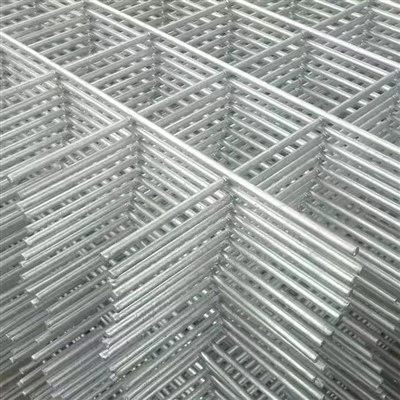
Next up: how we weave the mesh. A lot of suppliers use a plain weave, which is simple and cheap, but it’s terrible for impact because every intersection of wire is a weak point. When force hits a plain weave mesh, it’s transferred straight to those intersections, and if the intersection isn’t secured properly, it can pull apart. We started testing two other weaves: twilled weave and lock crimp weave. Twilled weave alternates over-and-under in a pattern that creates a tighter, more uniform mesh—each wire is in contact with its neighbors across two intersections instead of one, so force is distributed more evenly. Lock crimp weave is even better for impact, because the wires are crimped into a zig-zag pattern at the intersections, so they lock together instead of just crossing over each other. I saw a test of this at an industrial yard last year: they had two mesh panels, one plain weave and one lock crimp, both made of the same HTLA wire. They shot a 2-pound steel ball at each panel at 30 mph. The plain weave panel tore a 12-inch hole, the lock crimp panel only had a small dent, because the crimped intersections didn’t slip apart under the force.
A word of caution here: some cheap suppliers will call any woven mesh “lock crimp” when they just crimp the edges, not the actual intersections. That’s a scam we’ve seen a lot. The real lock crimp process requires specialized machinery that bends each wire at every intersection before interlocking it, which adds a small cost—but the impact resistance is 30-40% higher than plain weave, per independent tests we’ve run with a local materials lab. We don’t cut corners on that, because our clients pay for performance, not a label.
Another factor people rarely consider: galvanization, and not just any galvanization. Hot-dip galvanizing is standard for rust protection, but the thickness and quality of the zinc coating have a big effect on impact resistance. If the zinc is too thick, it becomes brittle—think of a glass pane that cracks when you bend it. If it’s too thin, it wears off, and corrosion sets in, which weakens the wire over time. For impact-resistant mesh, we use a “nano-thick hot-dip galvanizing” process we developed in partnership with a metal finishing company—wait, no, let me correct that, it’s actually a controlled high-brightness hot-dip process that applies a uniform zinc coating of 2.2 ounces per square foot, which is the sweet spot. It’s thick enough to last 20+ years outdoors, but flexible enough that it doesn’t crack when the wire stretches under impact. A few months ago, a solar farm developer contacted us because their existing mesh (with a 1.2 ounce per square foot zinc coating) was cracking after just two years from hail damage. We replaced it with our coated HTLA lock crimp mesh, and their maintenance team told us last month that after two major hail storms, not a single panel had cracked. The old mesh? 15% of it needed replacement in the same period.
Wait, also—we test every batch of mesh for impact resistance, right? A lot of suppliers just do a tensile strength test and call it good. We run a dynamic impact test: we drop a 10-pound steel weight from 6 feet above a panel, and measure how much it deforms, and whether it tears. If it deforms more than 2 inches or tears, we scrap the batch. That’s extra work, but it’s how we make sure our mesh actually performs when it matters, not just on paper.
Now, what about specialty applications? Because impact resistance needs change depending on what the mesh is used for. For example, agricultural mesh used for chicken coops needs to stand up to pecking and small predator attacks—we add a thin layer of polyvinyl chloride (PVC) coating to the outside, but not the thick, rigid PVC that cracks. We use a flexible PVC coating that’s 0.02 inches thick, which adds a buffer against small impacts, repels moisture, and doesn’t reduce the wire’s elongation. A poultry farmer in Ohio told us that before our coated mesh, he’d replace his chicken coop mesh every 18 months from raccoon and hawk attacks; now, his mesh is 4 years old and still in good shape. For industrial applications, like particle separation in mines, we use a combination of HTLA wire and a rubberized backing layer. The rubber absorbs impact from heavy rocks, so the mesh doesn’t tear from repeated hits. We installed this for a coal processing plant in West Virginia a year ago, and their mesh replacement time went from every 6 months to every 24 months—saving them over $120,000 a year in maintenance and downtime.
I want to be clear: there’s no magic bullet. You can’t take a standard plain weave mesh made of low-carbon steel and make it impact-resistant just by galvanizing it. It’s a combination of the wire’s material properties, the weave pattern, the coating, and the manufacturing process. We’ve had clients who come to us after buying cheap mesh from big box stores, thinking it’s “heavy duty,” only to find it falls apart in the field. Last year, a landscaper came to me with a fence he’d installed for a residential property—he said the 10-gauge “heavy duty” mesh from the store bent when a kid leaned on it. He wanted us to re-do it with our 12-gauge HTLA lock crimp mesh, because he said even though it’s a little thinner wire, it’s far sturdier under impact. That’s a perfect example of why gauge alone doesn’t tell the whole story—thicker wire isn’t always better if it’s brittle.
I’ve also learned over the years that installation matters just as much as the mesh itself. A lot of people think “installing is installing,” but how you stretch and tension the mesh makes a huge difference. If you leave a mesh panel too loose, it will sag, and when force hits it, that sag acts like a trampoline that can stretch too far and tear. If you tension it too tight, there’s no give at all, so it snaps on impact. We train all our clients’ installers (or work with their teams to adjust tension) to aim for a slight, uniform curve in the panel—about 1/4 inch per foot of height. That curve lets the mesh absorb force evenly across the entire panel, instead of concentrating it at the posts. A concrete company in Texas told us that after they started following our tensioning guidelines, their mesh panels for highway construction (which have to stand up to debris from road work) had 50% fewer breaks.
If you’re reading this and you’re dealing with wire mesh that doesn’t hold up to impact, I want you to know you don’t have to settle for frustration and frequent replacements. As someone who’s been in this industry for over a decade, talking to real users, testing products in real conditions, I can tell you that small, targeted changes to the wire, weave, and process make all the difference. We don’t sell one-size-fits-all impact-resistant mesh—we work with each client to figure out their specific needs: are they dealing with hail? Cattle? Mine rocks? Construction debris? Then we custom-build a mesh that fits their application.
I can also tell you that the extra investment in impact-resistant mesh pays for itself within a few years, even faster for commercial or industrial users. We’ve calculated that our average client saves 35-40% on maintenance and replacement costs in the first two years compared to using standard mesh. For a ranch with 10 miles of fence, that’s thousands of dollars in savings every year. For a construction company, that’s less downtime, more project on-time deliveries, and happier clients.
If you’re tired of wasting money on wire mesh that fails when you need it most, and you want to talk about what impact-resistant solution is right for your project, I’m here to help. We can send you free test samples, walk you through our testing process, and work with your team to find the best combination of material, weave, and size to meet your needs. Don’t let another storm, animal, or piece of debris catch you off guard—invest in mesh that’s built to last.
Anti-Tank Barrier References
ASTM A1023-19, Standard Specification for High-Tensile Low-Alloy Steel Wire for Woven Wire Mesh
Journal of Materials Science, “Dynamic Impact Resistance of Woven Wire Mesh: Effect of Weave Pattern and Wire Elongation”, 2021
National Farm and Ranch Network, “Fencing Performance in Extreme Weather: A 10-Year Field Study”, 2022
Hebei Shenyi Metal Products Co., Ltd.
Hebei Shenyi Metal Products Co., Ltd. is one of the most professional wire mesh manufacturers and suppliers in China, featured by quality products and good service. Please rest assured to wholesale durable wire mesh in stock here and get free sample from our factory. Customized orders are welcome.
Address: Gengtun Industrial Zone, Gengtun Village, Xiliangwa Township, Anping County, Hengshui City, Hebei Province
E-mail: HBshenyi@outlook.com
WebSite: https://www.shenyimetal.com/
