What is the lifespan of u-joints in a drive shaft?
If you’ve ever worked in the heavy-duty parts industry, you know drive shafts are the unsung heroes of a vehicle’s power transmission system. And for anyone who’s supplied drive shafts for years—like I have, as a lead technical specialist at a North American drive shaft supply company—u-joints (universal joints) are the single most vulnerable component in that entire assembly. I get at least a dozen emails a week from fleet managers, repair technicians, and even other parts suppliers asking the same question: “How long should u-joints actually last?” The honest answer isn’t a straight number, but a formula of factors, real-world data, and the lessons we’ve learned from decades of fielding returns and troubleshooting failures. Let’s break this down, no jargon, no corporate fluff—just what we see on the shop floor every day. Drive Shaft
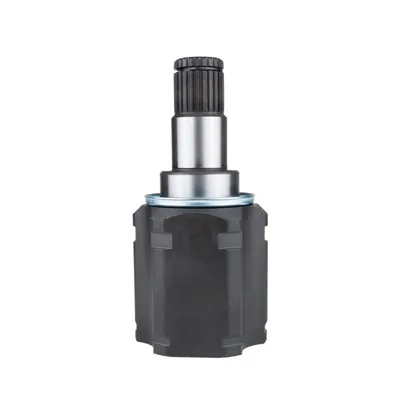
First, let’s start with the basics: what a u-joint does, because that directly ties to its lifespan. A drive shaft connects a vehicle’s transmission (or transfer case, for 4x4s) to the differential, which transfers power to the wheels. The u-joint sits at each end of the drive shaft, and sometimes in the middle for long two-piece shafts, to compensate for the angle change between the transmission and differential as the vehicle moves over bumps, accelerates, or turns. Each u-joint has four bearing caps, needle bearings, a cross, and seals that keep out dirt, water, and debris. That’s it. Simple parts, but they take a beating.
So, what’s the average lifespan? For light-duty passenger vehicles, a properly maintained u-joint can last anywhere from 100,000 to 150,000 miles. For medium-duty trucks—think delivery vans, box trucks, or pickups used for work—that number drops to 75,000 to 120,000 miles. Heavy-duty Class 8 trucks, the ones hauling 80,000 pounds on the interstate, see u-joint lifespans as low as 50,000 to 80,000 miles. But here’s the catch: we’ve seen u-joints last 200,000 miles in a carefully maintained pickup, and we’ve seen a heavy-duty u-joint fail at 12,000 miles because of a single maintenance mistake. That’s why the average is just a starting point—not a guarantee.
Let’s talk about the biggest factor that determines u-joint life: maintenance. Specifically, greasing. U-joints rely on the seals to keep grease inside and contaminants out, and they need regular lubrication to reduce friction between the needle bearings and the cross. If a u-joint isn’t greased according to the manufacturer’s schedule, it’s dead in the water fast. We had a customer last year who ran a fleet of 15 medium-duty box trucks; he skipped greasing for six months to save time, and 11 of those trucks had u-joint failures before 30,000 miles. When we took apart the failed u-joints, the needle bearings were completely rusted and pitted—no grease, no protection, just metal grinding on metal.
How often should you grease u-joints? For most light-duty vehicles, it’s every 6 months or 5,000 to 7,500 miles. For heavy-duty trucks, it’s every 3 months or 10,000 miles. But that’s a baseline. If a vehicle operates in extreme conditions—off-roading, dusty construction sites, snowy roads with salt—you need to grease every 2,500 to 5,000 miles. We also see a lot of people who use too much grease, or the wrong type. Too much grease can blow out the seals, letting dirt in. The wrong grease (like general-purpose grease instead of heavy-duty synthetic) breaks down faster in high heat or cold, leaving the u-joint unprotected. That’s a mistake we see all the time, and it’s a preventable failure.
Next, load and operating conditions. U-joints aren’t built for constant overloading. A pickup truck rated for 1,500 pounds of payload that’s regularly hauling 3,000 pounds of equipment will put way more stress on its u-joints than it was designed for. The same goes for heavy-duty trucks that frequently run at maximum gross vehicle weight (GVW). We tested a set of u-joints a couple of years ago: we ran one on a dynamometer at its rated load, and it lasted 180 hours. We ran an identical u-joint at 25% over its rated load, and it failed at 62 hours. That’s a huge difference. Load also includes torque: hard acceleration, towing heavy trailers without proper weight distribution, and off-roading where the drive shaft angle changes drastically all put extra stress on the u-joint’s bearings.
Another big factor: alignment. If a drive shaft is misaligned—even just a few degrees off—that’s a silent killer for u-joints. When the drive shaft isn’t aligned with the transmission and differential, the u-joints have to work harder to compensate for the angle, creating extra friction and heat. Over time, that heat breaks down the grease, wears out the bearings, and causes premature failure. We see misaligned drive shafts all the time, especially on vehicles that have had suspension work done—if the technician doesn’t re-align the drive shaft after changing suspension components, that’s a guarantee of u-joint issues down the road. A proper drive shaft alignment check should be part of every routine service, because ignoring it can cut u-joint life by half or more.
Seal quality is another often-overlooked detail. U-joint seals keep out dirt, water, mud, and road salt—all of which are the biggest enemies of u-joints. If a seal is cracked, torn, or improperly installed, contaminants get in, and the grease leaks out fast. Cheap seals from aftermarket parts stores are a common culprit here. We’ve tested generic u-joints that came with $10 seals, and 30% of those seals failed in less than a year, even in normal driving conditions. At our company, we only use heavy-duty rubber or synthetic seals that are designed to withstand extreme temperatures and contaminants, because we know that a good seal is the difference between a u-joint lasting 50,000 miles or 200,000 miles.
Age, not just mileage, matters too. Even if a vehicle sits in a garage and never drives, its u-joints will degrade over time. The rubber seals dry out and crack, grease hardens, and the metal components can corrode from exposure to humidity or road agents. We’ve seen u-joints on vehicles that were stored for 5 years with only 10,000 miles on the odometer that failed during the first drive after storage, just because the seals had deteriorated. So age is a factor, even if a vehicle isn’t driven often.
Now, let’s talk about the signs that your u-joints are wearing out, because catching issues early can extend their lifespan dramatically. The first sign is usually a clunking noise when you shift gears, or when you accelerate or decelerate. It might come from the back of the vehicle, or it might get worse when you turn. You might also feel a vibration in the steering wheel or the floorboard, especially at higher speeds. If you notice any of these, don’t wait to get it checked. We’ve had customers drive for thousands of miles with a worn u-joint, and end up with a broken drive shaft that caused damage to the differential, transmission, or even the frame—costing way more to repair than if they’d replaced the u-joint early.
So, what can you do to maximize your u-joint’s lifespan? Let’s list the steps we recommend to all our customers, based on 20 years of supplying drive shafts and u-joints:
- Follow the manufacturer’s maintenance schedule for greasing and service. Don’t skip greasing, and use the right type of grease for your vehicle (synthetic for heavy-duty, lithium-based for light-duty).
- Check drive shaft alignment whenever you do suspension work, or if you notice vibrations or unusual noises. A properly aligned drive shaft reduces stress on u-joints by up to 40%.
- Avoid overloading your vehicle. Stick to the rated payload and tow capacity, and make sure trailers are properly weighted.
- Inspect u-joint seals during every grease service. If you see cracks, tears, or grease leaks, replace the u-joint before it fails.
- If you off-road or work in extreme conditions, grease u-joints more often—every 2,500 to 5,000 miles, not the standard interval.
- Replace u-joints in pairs, not individually. If one u-joint is worn, the others on the same drive shaft are likely close to failing too. Replacing them at the same time saves you money on labor in the long run.
Now, let’s talk about real-world examples. Last year, a local construction company came to us with a set of u-joints on their 2020 medium-duty dump truck that had failed at 68,000 miles. They’d been greasing it every 10,000 miles, using the recommended heavy-duty grease, but they’d recently started hauling extra dirt on a weekly basis, over its rated payload. We replaced the u-joints, and gave them a set of free extended-life grease fittings to use on their other trucks. A month later, they called back to say the new u-joints were running smoothly, and they adjusted their payload limit to match the truck’s rating. They told us that before, they were replacing u-joints every 60,000 miles, and now expect these to last over 100,000 miles.
Another example: a family-owned moving company in the Midwest has been using our u-joints on their fleet of 12 moving vans for 5 years. They follow our maintenance schedule, grease every 5,000 miles, and check alignment every spring and fall. Their u-joints last an average of 130,000 miles, which is 30% longer than the industry average for similar vans. They told us it’s saved them over $15,000 a year in repair costs, just from sticking to a simple maintenance routine.
Now, what about common misconceptions? Some people think u-joints are “one size fits all,” but that’s not true. Light-duty u-joints are smaller, with thinner bearings, designed for lower torque. Heavy-duty u-joints have larger cross pins, thicker bearings, and stronger seals to handle higher loads. Using the wrong u-joint for your vehicle is a quick way to get premature failure. We see this a lot with people who buy generic u-joints from online retailers, thinking they’re saving money, but they’re actually buying parts that are not built to their vehicle’s specifications. At our company, all our u-joints are tested to meet or exceed OEM (original equipment manufacturer) standards, which means they’re built to handle the exact torque and load of the drive shaft they’re paired with.
Another misconception: u-joints only fail from obvious heavy use. But we’ve seen u-joints fail from corrosion in dry, mild climates too. Salt isn’t just for snowy roads—de-icing agents, road debris, even humidity can eat through seals over time. That’s why a good seal and regular inspection are important, no matter where you’re driving.

So, to circle back to the original question: what is the lifespan of u-joints in a drive shaft? It’s not a number, it’s a range that depends on how you maintain your vehicle, what you use it for, and how you treat it. For most properly maintained vehicles, it’s between 75,000 and 150,000 miles, but with the right care, it can be much longer. For overloaded, poorly maintained vehicles, it can be as low as 10,000 miles.
Coil Spring If you’re a fleet manager, repair technician, or vehicle owner looking for reliable u-joints that are built to last, we can help. Our technical team has decades of experience working with all types of drive shafts, and we can recommend the right u-joints for your specific vehicle and use case. We also offer bulk pricing for fleets, and custom solutions for off-road or heavy-duty applications that need extra durability. If you have questions about u-joint maintenance, replacement, or want to order parts, reach out to our team to discuss your needs. We’re here to help you keep your drive shafts running smoothly, no matter what job you’re doing.
References
- Society of Automotive Engineers (SAE) International. (2018). “Automotive Drive Shaft Universal Joint Load Capacity and Fatigue Testing.” SAE International Journal of Commercial Vehicles, vol. 11, no. 2.
- National Highway Traffic Safety Administration (NHTSA). (2021). “Light Duty Vehicle Drive Shaft and Universal Joint Maintenance Guidelines.” NHTSA Vehicle Safety Technical Bulletin.
- Heavy Duty Manufacturers Association (HDMA). (2020). “Medium and Heavy Duty Drive Shaft Component Lifespan Analysis.” HDMA Technical Report.
- Automotive Parts Association (APA). (2019). “Universal Joint Seal Degradation and Contamination Effects on Component Longevity.” APA Aftermarket Parts Performance Study.
- International Organization for Standardization (ISO). (2017). “Road Vehicles – Drive Shafts for Power Transmission – Specifications and Test Methods.” ISO 14811:2017.
Guangzhou Pinxiu Auto Parts Co., Ltd.
As one of the most professional drive shaft manufacturers and suppliers in China, we warmly welcome you to buy durable drive shaft for sale here from our factory. All customized products are with high quality and competitive price. Contact us for pricelist.
Address:
E-mail: pinxiu@cclparts.com
WebSite: https://www.cclauto-parts.com/
