Hey there, it’s Jake from your go-to pole mounted transformer oil tank supplier. If you’ve ever stared up at those grey metal boxes on power poles and wondered, “what even is that tank made of?” — well, you’re in the right place. I talk to electric utility crews, electrical contractors, and even other suppliers all day, and one question comes up all the time: how do these oil tanks hold up rain, snow, heat, and whatever else the sky throws at them without leaking or failing? Spoiler: it’s not just random metal. There’s some actual engineering behind it, and I’m gonna break it down like I would over a coffee at my workshop, no stuffy textbook jargon. Pole Mounted Transformer Oil Tank

First off, let’s get one thing straight: pole mounted transformers aren’t your big, industrial floor-standing units. They’re small, lightweight, bolted to a wooden or concrete pole usually on residential streets, so their oil tanks can’t be heavy. That’s why most of them start with steel, but not just any steel. The bread and butter here is low-carbon mild steel — also called plain carbon steel, C1010 to be specific — and it’s the go-to for 90% of the tanks we supply. Why low carbon? Because it’s flexible, can be bent and welded without cracking, which is non-negotiable for a tank that has to fit snugly on a pole and handle vibrations from power lines all day. Regular high-carbon steel is too brittle; hit it wrong and it snaps, weld it and it gets weak. Low carbon? It’s tough, easy to work with, and cheap enough that we don’t have to charge an arm and a leg for replacements when a tank takes a minor dent from a tree branch.
But wait, bare steel rusts. Duh. If you leave a bare steel tank out in the rain for six months, it’ll turn orange and leak oil before you know it. So every single tank gets a coating, and that’s where the second key material comes in: marine-grade epoxy primer and polyurethane topcoat. I know it sounds fancy, but it’s basically the same stuff they use on boat hulls — stuff that can stand up to salt, moisture, and temperature swings. The epoxy is the first layer, applied directly to the steel, right? It bonds super tight, stops water from touching the steel metal, and fills in tiny little scratches or gaps in the surface that would otherwise turn into rust spots. Then we hit it with a polyurethane topcoat to add a tough, scratch-resistant layer that fends off UV rays (so it doesn’t peel in the sun) and makes it easier to wash off dirt or bird droppings. Some smaller suppliers might skip the topcoat to cut costs, but that’s a bad call — I’ve seen tanks fall apart in 2 years because they skipped that step. We never do that.
Now, there are a few special cases where we switch things up a little, and that’s where galvanized steel comes in. Wait, galvanized steel is steel coated with zinc, right? Yeah, for some areas that are super humid, like coastal regions where salt air eats through paint fast, or places with a lot of industrial pollution, galvanized is better than epoxy-based coatings. The zinc acts as a sacrificial layer — if a scratch does happen, the zinc rusts first instead of the steel underneath. It’s a simpler coating, but it’s not for everyone. Galvanized steel is thicker than coated steel, so it adds a little more weight, which can be a problem for poles that aren’t rated to carry extra load. So we only suggest galvanized when the customer’s location makes it necessary, not just for a quick fix.
Next up, we can’t forget the parts that hold the tank together and connect it to the transformer. Those are the fittings, right? Nuts, bolts, the mounting brackets that strap the tank to the pole. What are those made of? Galvanized steel too, but sometimes stainless steel, especially for coastal areas where salt would make regular bolts rust solid. We use 304 stainless steel for the most corrosive environments — it’s a little more expensive, but it doesn’t rust, period, and it doesn’t seize up so we can adjust the tank if needed later. No one wants to be climbing a pole in 100-degree heat fighting a rusted bolt that won’t turn, trust me.
Wait, what about the oil itself? No, wait, the tank material, not the oil. Oh, right, there’s also gaskets and seals that line the tank seams and where the pipes connect. Those are super important because they have to hold oil, so they can’t be rubber that breaks down. We use nitrile rubber (also called Buna-N) for all our gaskets. Nitrile is resistant to mineral oil, which is what almost all transformers use — it doesn’t swell up, get soft, or crumble after years of holding oil. Cheaper gaskets use regular natural rubber, but that falls apart in a year when exposed to oil. We source our nitrile from reputable manufacturers for that exact reason.
Oh, and a little fun fact: a lot of people ask why the tanks are painted grey. It’s not just for looks. The grey polyurethane topcoat reflects sunlight, so the oil inside doesn’t get too hot. If the oil gets too warm, it breaks down faster, loses its insulating properties, and the transformer works less efficiently. Black tanks would absorb way more heat, so we always go with light grey or sometimes off-white for areas that get super hot, like Arizona or Florida. That’s a small detail, but it makes a huge difference in how long the transformer and the tank last.
Now, I know some of you might be thinking, “what about recycled materials?” A lot of industries are pushing for that, and we’ve jumped on that too. About 70% of the steel we use is post-consumer recycled steel, right? We work with a supplier that sources from old car bodies and construction scrap, so we’re keeping metal out of landfills without cutting corners on quality. The epoxy and polyurethane coatings now have some recycled content too, so we’re doing our part for the environment while still making tanks that pass all the electrical safety tests. No greenwashing here — every tank we make is tested for pressure resistance, rust prevention, and oil tightness before it leaves our facility. We don’t send out junk to save a buck.
Let’s talk about common mistakes some suppliers make, because that’s what I see all the time. They’ll use low-grade steel, skip the proper coatings, use cheap gaskets, and then wonder why their tanks are leaking. Last year, a utility company came to us with a bunch of tanks that had only been installed for 18 months — the coating peeled, rust ate through the steel, and oil was seeping out. They went with a cut-rate supplier, and now they’re replacing half their street transformers because of it. We don’t do that. Every step of our process is designed for durability, because we know these tanks have to last 20, 30, even 40 years up on those poles. That’s a long time, and there’s no room for shortcuts.
Wait, did I miss anything? Oh, right, the size and weight. We make tanks for transformers ranging from tiny 5kVA units for single homes up to 500kVA for small neighborhoods. The materials adjust a little for size: the smaller tanks use thinner low-carbon steel (2mm to 3mm thick) since they don’t hold as much oil, and the larger ones use 4mm to 6mm steel to handle the extra weight of more oil and withstand more pressure. It’s all engineered, not just guesswork.
So if you’re out there shopping for pole mounted transformer oil tanks, don’t just look for the cheapest price. Ask what materials they use. If they say “steel and paint,” run. If they say low-carbon mild steel, epoxy and polyurethane coatings, nitrile gaskets, and galvanized or stainless steel fittings, that’s a sign they know their stuff. We’ve been in this game for over 15 years, worked with hundreds of utility companies and contractors across North America, and we stand behind every tank we sell.
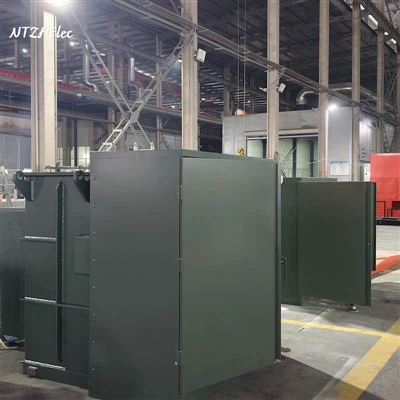
If you need new tanks, replacements for old ones that are leaking, or just want to ask questions about what would work best for your location, hit us up. We can send over specs, samples, and a quote without any pressure, no fine print. We’re here to help, not make a quick sale. When you need a tank that’s gonna hold up, you call us.
Transformer Clamp References:
- Electrical Construction & Maintenance Magazine. "Materials Selection for Distribution Transformer Tanks," 2021.
- ASTM International. "Standard Specification for Low-Carbon Steel Sheet and Strip for General Purpose Application," A1008/A1008M, 2020.
- National Electrical Manufacturers Association (NEMA). "Standard for Distribution Transformers, Part 2: General Requirements," TR-1, 2019.
- Society of Petroleum Engineers. "Synthetic Elastomers for Oilfield Sealing Applications," 2018.
- International Code Council. "Residential and Commercial Electrical Code Requirements for Pole-Mounted Transformers," 2022.
Nantong Zhihe Electric Co., Ltd.
As one of the most professional pole mounted transformer oil tank manufacturers and suppliers in China, we’re featured by quality products and low price. Please rest assured to wholesale cheap pole mounted transformer oil tank made in China here from our factory. Customized orders are welcome.
Address: NO.202 Jianghai West Road, Hai’an Town, Hai’an City, Jiangsu Province
E-mail: colt.ntzh@gmail.com
WebSite: https://www.ntzhelectric.com/
