Hey everyone, and welcome back to my little corner of the internet where we cut through the chaos of home renovation and building supplies—no stuffy jargon, just real talk from someone who’s been in the PVC door game for over 8 years. For anyone who’s ever stood in a hardware store aisle, staring at door options like they’re a foreign language (trust me, I’ve been there), you’ve probably wondered: are PVC doors actually worth the hype? Especially when there’s wood, steel, and all those other materials screaming for your cash. As a guy who’s been on the supplier end of this, I’ve had hundreds of customers ask me this exact question, so today we’re breaking down the cost-effectiveness of PVC doors—no sales pitch, just straight-up numbers and real-world scenarios you can actually relate to. PVC Door
First, let’s get one thing out of the way: cost-effectiveness isn’t just about upfront price. If you’re someone who’s gonna move in 5 years, the cheapest door might seem like a steal at first—but if it warps, fades, or breaks in that time, you’re throwing money down the drain. If you’re renovating a rental property, the last thing you want is to replace doors every couple of years because it kills your profit margin. And if you’re building your forever home, you want something that doesn’t drain your wallet over time. That’s where PVC doors shine, but let’s do the math, not just the marketing.
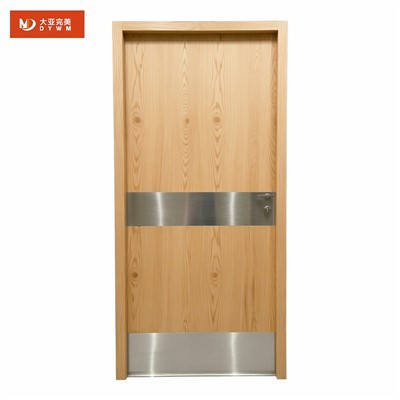
Let’s start with the upfront cost because that’s usually the first thing everyone checks. Right now, a basic interior wood door (standard size, hollow core) will run you around $80-$150. A solid wood interior door? That’s $250-$600, easy. Steel entry doors (super common for front doors) are usually $300-$800 for a basic model. Now, what about a PVC door? Let’s keep it apples to apples. A standard interior PVC door (same size as that hollow wood one) costs between $60-$120. Wait, that’s cheaper upfront? But what about entry doors? A mid-grade PVC front door with a basic lock and weatherstripping is around $200-$400. Compare that to a steel entry door that’s the same quality—steel is $350-$700 on average. Oh, and before anyone yells at me, yeah, I know there are fancy, high-end PVC doors that run more—like if you want a mimics solid wood grain or has extra noise reduction, those can hit $500+, but that’s still cheaper than a solid wood door of the same “luxury” level. So upfront, PVC is way cheaper than almost every other common door material, even entry doors. But here’s where it gets interesting: it’s not just the door itself. Installation costs matter too. PVC doors are way lighter than wood or steel. A standard hollow wood door is like 15-20 pounds, a steel entry door is 40-50 pounds. A PVC door? Same size, maybe 10-12 pounds. That means installation is faster. I’ve had my install partners tell me they can hang a PVC interior door in 15 minutes, vs 30+ for a hollow wood one, and 45+ for a steel entry. Faster installation means lower labor costs—usually $20-$50 less per door, depending on size. If you’re doing a whole house of 10 interior doors, that’s $200-$500 in labor savings right there. That’s a big win for upfront total cost.
But let’s get to the long-term stuff, because cost-effectiveness is really about value over time. That’s where a lot of people sleep on PVC doors. First, durability. Wood doors warp. I’ve seen it a hundred times—customer buys a nice solid wood door, moves in 2 years, and now it sticks when they open it in the summer because of humidity, or cracks when it gets dry in the winter. Especially if you live somewhere like the Southeast US, where humidity swings are wild, or the Midwest, with super dry winters. Wood’s porous, so it absorbs moisture and expands. PVC? It’s non-porous. No warping, no swelling, no cracking from humidity or temperature changes. I’ve had customers tell me their PVC doors have been in rental properties for 10 years, and the only thing they’ve had to do is wipe them down. Compare that to a wood door in a rental—you’re looking at at least one replacement every 5-7 years, because tenants are rough on them, or they just get damaged from the elements. What about entry doors? Steel doors rust if you scratch the paint, right? PVC doesn’t rust, doesn’t corrode. Even if you scuff it moving furniture or a bike into the garage, you can fill that with PVC-specific filler in 10 minutes, no need to repaint the whole door. Wood doors scratch and ding way easier too, and those marks show—you either have to sand and refinish (which costs $100-$150 per door, minimum) or replace it.
Then there’s maintenance costs. Let’s break that down. Wood doors need to be sealed, stained, or painted every 3-5 years. That’s not just the cost of the stain or paint—you have to take the door off, prep it, sand it, apply multiple coats, let it dry. A pro will charge you $150-$300 per door for that. Steel entry doors need touch-ups every 5 years too, because the paint chips, and rust starts under it. That’s another $100-$200 per door. PVC doors? All you need is a damp cloth and some mild soap. No sanding, no painting, no sealing. Ever. I’ve had customers ask me if they can use Windex on them (yes, even the ones with faux wood grain) or if there’s anything special, and the answer is no—just wipe it down. That’s zero maintenance costs over the lifetime of the door. Let’s do a quick math example for a front door that’s in use for 20 years. If you go with steel: upfront $500, plus two repaints at $150 each, total $800. If you go with PVC: upfront $350, zero maintenance, total $350. That’s a $450 difference. For a whole house of 8 interior doors: wood doors upfront at $120 each = $960, plus refinishing every 5 years for 20 years = 4 refinishes at $200 each = $800, total $1760. PVC doors upfront at $80 each = $640, zero refinishing, total $640. That’s over $1100 saved. That’s the kind of math that makes anyone go “wait, that’s a no-brainer.”
Wait, but what about energy efficiency? A lot of people don’t think about doors as part of your home’s energy bill, but they are. Especially entry doors, which can be a huge draft source. PVC has better thermal insulation than both solid wood and steel, right? Because it’s a solid material with no gaps, and modern PVC doors have foam cores, which add to insulation. I was talking to an energy auditor last year, and he said that a well-installed PVC entry door can cut your heating and cooling costs by 5-10% compared to a steel door, and 3-7% compared to a wood door. Let’s say your annual energy bill is $1500. 5% savings is $75 a year. Over 20 years, that’s $1500. That’s another big chunk of change. And if you live in a place with extreme temperatures—like Arizona in the summer, or Minnesota in the winter—those savings add up even more. I had a customer in Phoenix who said her PVC front door cut her AC bill by $100 a month in the summer. That’s $1200 a year, no joke. A lot of people don’t factor that into their cost calculations, but it’s real money in your pocket every month.
Now, let’s address the elephant in the room: what about quality? A lot of people have this old stereotype that PVC is cheap, flimsy, or looks artificial. Let’s get that out of the way. The PVC doors we make (hey, full transparency here) use high-grade uPVC (unplasticized polyvinyl chloride), which is way more durable than the old, flimsy PVC you might have seen 20 years ago. We test every door to handle extreme temperature swings, heavy impact, and even UV rays, so they don’t fade in the sun. Faux wood grain PVC doors look almost identical to solid wood—you have to get up really close to tell the difference, and they don’t scratch like real wood. And noise reduction? If you live on a busy street or have an upstairs apartment, modern PVC interior doors with multi-layer seals are way better at blocking noise than hollow wood doors. I have a client who had a home office—she put a PVC interior door between her office and her kid’s playroom, and said she could hear almost no noise from the playroom when her kid was watching cartoons. That’s a huge plus for anyone who works from home or needs quiet.
But wait, is there a case where PVC isn’t cost-effective? Let’s be real, no product is perfect. If you’re going for a super high-end custom home, where you want solid oak doors that look like furniture and are a status symbol, PVC might not be for you—although even then, a high-end PVC door is a fraction of the cost of a solid wood custom door, and most people can’t tell the difference. If you live in a super humid coastal area where you need doors that can handle salt air, PVC is actually really good for that, but if you want that solid wood look, you’d have to spend a fortune on marine-grade wood, which costs way more than PVC. The only time I’d say PVC isn’t worth it is if you plan on living in your home for less than 3 years, because you probably won’t recoup the long-term savings. But even then, the upfront cost is lower, so you’re not out as much if you sell. And for rentals? PVC is perfect—tenants don’t damage it as much, you don’t have to spend money on maintenance, and you can turn around and sell the rental property later without having to replace all the doors (which is a huge selling point).
Let’s also talk about resale value, because that’s a big one for homeowners. I’ve had real estate agents tell me that PVC doors don’t hurt resale value—actually, they help. Because buyers hate the idea of having to repaint or replace doors, and they like the energy efficiency aspect. A lot of buyers will pay a little extra for a home with low-maintenance doors, because they know they don’t have to spend money on that right away. Wood doors used to be the go-to for resale, but that’s changed now—buyers are more practical, and they care about energy bills and maintenance costs, not just how nice a wood door looks. I’ve had a customer who sold her home last year, and the appraiser pointed out that the PVC entry door saved her $1500 a year in energy costs, which added to her home’s value. That’s a tangible number buyers and appraisers care about.
Wait, let’s make sure we’re not ignoring any downsides, because no product is all good. PVC isn’t recyclable in the same way as wood or steel, right? That’s a fair point. But the good news is that most PVC doors have a long lifespan—20+ years, which is longer than most wood doors (10-15 years, if you’re lucky, depending on use). And when you do replace a PVC door, most suppliers (including me) take old PVC doors back and recycle them into new products, so you’re not just throwing them in a landfill. The other thing is that some people don’t like the “plastic” look—like if you go for a super cheap, basic PVC door that doesn’t have a good finish, it can look a little fake. But if you pick a mid-grade or high-grade PVC door with a faux wood grain or a smooth finish, it looks just as good as any other door material. It’s all about choosing the right product, not just the cheapest one.
Let’s circle back to the original question: is PVC door cost-effective? From where I sit, as a supplier who’s talked to hundreds of customers, done the math, and seen the real-world results, the answer is a resounding yes—for almost everyone. If you’re a homeowner building or renovating, a landlord with rental properties, someone on a budget who doesn’t want hidden costs, PVC doors give you lower upfront costs, lower long-term maintenance, lower energy bills, and durability that lasts decades. The only exceptions are if you’re going for a custom luxury wood door or you’re moving in the next couple of years (but even then, it’s still cheaper upfront).
I get it—when you’re planning a big project, it’s easy to get swayed by what you’ve always heard is “better.” For years, wood doors were the default, but times have changed. Modern PVC doors are built to last, look great, and save you money in ways you might not even think of at first. I’ve had customers come to me saying they were gonna go with steel doors, and after comparing numbers, they switched to PVC and saved $2000 on their whole door project. That’s money they put towards new floors, or a kitchen upgrade, or whatever else they needed.
Carved Decoration Door If you’re currently in the middle of planning a renovation, building a home, or replacing doors in your rental, and you want to talk through your specific needs—like how many doors you need, if you need interior or entry doors, budget, or anything else—hit me up. No pressure, just real answers about what works for your situation. We can walk through different options, give you exact pricing, and make sure you get something that fits your budget and your long-term goals. Don’t waste time guessing if PVC is right for you—let’s chat.
References
- U.S. Department of Energy. (2022). "Energy Efficiency of Residential Doors." Energy.gov.
- National Association of Home Builders. (2021). "Home Maintenance Costs: A Survey of Homeowners." NAHB Research Center.
- Construction Building Materials Association. (2020). "Durability and Lifespan of PVC vs. Wood vs. Steel Building Products." CBMA Technical Report.
- Real Estate Staging Association. (2022). "Home Features That Impact Resale Value." RESA Annual Survey.
- International Association of Certified Home Inspectors. (2021). "Common Door Failures and Preventative Maintenance." InterNACHI Standards of Practice.
One May Dee Show Furniture Co., Ltd.
As one of the most professional pvc door manufacturers and suppliers in China, we’re featured by quality products and good price. Please rest assured to wholesale cheap pvc door made in China here and get quotation from our factory. Customized orders are welcome.
Address: Laomiao Village, Dacheng Town, Sanyuan County, Xianyang City, Shaanxi Province, China.
E-mail: trade@omdoor.com
WebSite: https://www.omdoor.com/
