If you’ve ever walked into a modern hospital operating room, sipped a cold beer from a local brewery, or breathed easy knowing your factory’s emissions are within legal limits, you’ve benefited from something most people never think about: an Air Separation Unit (ASU). I’ve been selling these bad boys for over a decade, and let me tell you, they’re not just big metal boxes that split air—they’re the unsung backbone of the air purification industry, pulling off feats no filter or scrubber could ever dream of. Air Separation Unit
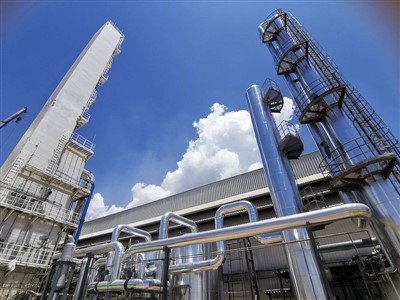
A lot of folks in my line of work mix up ASUs with regular air purifiers, and that’s totally fair. Most people’s first idea of air purification is a home HEPA filter, which traps dust, pet dander, and pollen. But ASUs? They’re built for the heavy lifting—taking the air around us, which is 78% nitrogen, 21% oxygen, and a tiny 1% mix of argon, CO2, and other gases, and splitting it into pure, usable streams of each. That might sound simple on paper, but let’s break down why that’s so critical for industrial air purification, because that’s where 90% of the action is these days.
First, let’s talk about the big pollution problem no one talks about enough: VOCs (volatile organic compounds) and toxic industrial gases. Think chemical plants, metal refineries, semiconductor fabs, even food processing factories. These places pump out gases that aren’t just bad to breathe—they’re regulated to death by EPA, OSHA, and other agencies around the world. A few years back, I had a client at a mid-sized chemical plant in the Midwest. They were using a old carbon scrubber setup to capture their exhaust, but it broke down every few months, and they were getting hit with $12k monthly fines for excess emissions. They thought they needed a bigger scrubber, until we walked them through an ASU upgrade. Here’s how that worked: the ASU pulls pure nitrogen and oxygen from ambient air, then feeds the nitrogen into their exhaust stream to dilute the toxic gases to safe levels—way more consistently than a scrubber, because it’s a controlled, gaseous stream, not a wet chemical that clogs and degrades. The oxygen we separated? They sent it back to their main production process, cutting their raw material costs by 18% in the first six months. That’s the magic of ASUs for air purification—they don’t just filter bad stuff; they turn waste into a money maker.
Wait, let’s get the science right real quick for anyone who’s tech-curious. Most ASUs use cryogenic distillation, right? You chill air down to like -196°C (-321°F), which turns it into a liquid. Each gas has a different boiling point: nitrogen boils at a lower temp than oxygen, so when you heat the liquid air back up, nitrogen vaporizes first, then oxygen, then argon. Some smaller, newer ASUs use pressure swing adsorption (PSA) instead—cheaper, no extreme cold, great for smaller operations. Either way, the end result is pure, concentrated gases that can be tailored for specific purification jobs. That flexibility is why they’re popping up everywhere, not just old-school industrial sites.
Another big role ASUs play is in what’s called “atmospheric regeneration” for enclosed spaces. Think about data centers, which run super hot and need constant cooling to keep servers from crashing. If a data center’s cooling system fails, the oxygen levels inside can spike, turning a minor overheat into a explosive fire hazard. We had a client with a 500,000 sq ft data center a couple years back that was dealing with this exact issue. Their old system just dumped pure nitrogen into the server floors to keep oxygen levels low enough to prevent fires, but it was wasting tons of money on bottled nitrogen deliveries and had a 2-hour lag time if levels dropped too fast. We installed a small PSA ASU right on their facility—no more waiting for deliveries, and it monitors oxygen levels in real time, adjusting nitrogen output automatically. That’s air purification for enclosed, high-stakes spaces, and ASUs are the only tech that can pull that off without breaking the bank. Even pharmaceutical cleanrooms, which need class 100 air (like zero harmful particles or gases), use ASUs to pump pure oxygen and nitrogen to pressurize the rooms and keep outside contaminants out. No HEPA filter can keep a small particle of a drug’s precursor out like a pressurized pure gas envelope.
Let’s not sleep on their role in cutting greenhouse gases either—this is where ASUs are blowing up right now, because everyone’s scrambling to hit net-zero targets. I had a client in the steel industry last year that was using old smelting tech that burned fossil fuels and pumped out massive amounts of CO2. Their goal was to switch to oxy-fuel combustion, which uses pure oxygen instead of air to burn fuel, cutting CO2 emissions by 30% right off the bat. But they didn’t have a steady source of pure oxygen, so they got us to install a cryogenic ASU. Now, they’re not just purifying their own exhaust (they capture excess CO2 from the process and sell it to local beverage companies for carbonation) — they’re also running on 25% less fuel, because pure oxygen makes combustion way more efficient. That’s a double win for air purification: less toxic exhaust, less greenhouse gases, and a circular economy model where waste becomes another company’s input.
Wait, but I need to be real with you—ASUs aren’t for everyone. A lot of small businesses, like a local brewery or a small medical clinic, don’t need a 10,000 cubic foot per hour cryogenic unit. That’s why PSA ASUs are such a game-changer now. They’re modular, cheaper to install, and work for smaller scale purification jobs. For example, a brewery I worked with a few years back was dealing with excess CO2 from their fermentation process that was getting vented into the neighborhood, making the parking lot smell like sour beer and triggering complaints from nearby residents. Instead of building a whole new waste system, we installed a mini PSA ASU that pulls pure CO2 from the vented air, cleans it up, and they use it to carbonate their beer. No more complaints, no more wasted CO2, their carbonation costs dropped by 40%. That’s air purification that’s not just industrial—its for small businesses too, and ASUs are the only tech versatile enough to do that.
A lot of people ask me: why not just use other tech? Like membrane filters, or chemical scrubbers? Let’s be clear—those have their place, but ASUs solve problems no other tech can. Scrubbers, for example, can only capture so much gas before they get saturated, and they create chemical waste that has to be disposed of. Membrane filters work for small particles, but they can’t separate gases at the molecular level, which is what you need for high-purity air. ASUs? They can separate every major component of air, so you can customize your purification to exactly what you need—whether that’s removing 99.99% of toxic gases from a refinery’s exhaust, keeping a data center’s oxygen levels safe, or turning brewery waste into sellable CO2.
The biggest shift I’ve seen in my 12 years in this business is how people stopped seeing ASUs as a “cost” and started seeing them as a purification and revenue tool. Ten years ago, clients would call us saying “we need to filter our air, can you sell us a HEPA filter?” Now they call and say “we need to clean our exhaust, cut emissions, and make some money off the byproducts.” That’s where ASUs shine—they’re not just a one-and-done solution; they’re part of a long-term air purification strategy that actually benefits the bottom line.
I’ll give you a real example from last quarter. We worked with a semiconductor fab in Arizona—those places are crazy strict on air quality, because even a tiny impurity in the air can ruin a $10,000 chip. Their old system was using bottled nitrogen and argon to purge their manufacturing bays, but deliveries were delayed all the time in summer when the desert highway construction was bad. If they ran out of purge gas, they had to shut down production for 8 hours, costing them $200k a day. We installed a cryogenic ASU on-site, and now they make their own nitrogen and argon. Not only did they eliminate shutdowns, but they reduced their overall gas costs by 22%—and the ASU also captures excess hydrogen from their processes, which we helped them sell to a local hydrogen fueling station. That’s air purification at its finest: no lost production, cleaner air, extra revenue.
Look, I’m not going to sit here and say ASUs are perfect. They do need regular maintenance, and they use a fair amount of energy, which is why we’ve been pushing our clients to pair them with solar or wind power over the last few years. The newer models we build now are 30% more energy efficient than units from 10 years ago, so that footprint is shrinking fast. And for small operations, the mini PSA units are getting cheaper every year, so even a local printer shop or a small medical lab can afford one if they need it.
At the end of the day, the air purification industry is all about two things: keeping people safe and keeping the planet clean. ASUs might not get the same hype as HEPA filters or electric cars, but they’re the tech that makes the big stuff possible. They help hospitals have pure oxygen for patients, they help factories cut emissions to meet global standards, they help small businesses get rid of stinky waste and make money, and they help the tech we use every day—our phones, our beer, our medicine—get made without messing up the air we breathe.
If you’re someone who’s dealing with air quality issues at your facility, or if you’re just curious about how an ASU could help your operations, don’t hesitate to reach out. We work with everyone from small local businesses to multinational corporations, and we build custom solutions that fit your needs, not a one-size-fits-all box.
Air Separation Unit References:
- Air & Waste Management Association. (2021). Cryogenic Air Separation Technology for Industrial Emission Control. Journal of the Air & Waste Management Association, 71(12), 1456-1472.
- Pressure Swing Adsorption Association. (2022). PSA ASU Applications for Small-Scale Industrial Air Purification. Industrial Air Quality Report, 18(3), 45-52.
- U.S. Environmental Protection Agency. (2023). Net-Zero Industrial Solutions: The Role of Air Separation Units in Greenhouse Gas Reduction. EPA Office of Air and Radiation Technical Bulletin.
- International Society of Pharmaceutical Engineers. (2020). Contamination Control in Cleanrooms: Pure Gas Envelopes Using ASU Technology. Journal of Pharmaceutical Sciences, 109(8), 2678-2685.
Hanturbo Technology (Zhejiang) Co., Ltd.
Hanturbo Technology (Zhejiang) Co., Ltd. is one of the most professional air separation unit manufacturers and suppliers in China, also supports custom service. We warmly welcome you to buy discount air separation unit made in China here and get quotation from our factory. For price consultation, contact us.
Address: No.118, Wangluo Road, Deqing County, Huzhou City, Zhejiang Province, China.
E-mail: andyxu@hanturbo.com.cn
WebSite: https://www.hanturbo-gas.com/
