Can C&I Energy Storage Be Used in Combination with Distributed Generation?
I’ve spent the last six years in the C&I (Commercial & Industrial) energy storage space—first troubleshooting battery systems for a food processing plant in the Midwest that struggled with peak demand charges, then helping a textile manufacturer in the Carolinas pair solar panels with their storage unit to cut energy bills by 40%. More times than I can count, when I walk into a new client’s facility, the first question after they ask about our lithium-ion storage systems is this: “Can we hook this up to our distributed generation?” C&I Energy Storage

It’s a fair question. Distributed generation—think rooftop solar, backup diesel generators, even small-scale wind turbines—has exploded in C&I settings over the last decade. The U.S. Energy Information Administration (EIA) reports that C&I on-site solar capacity grew by 18% in 2023 alone, as businesses look to avoid volatile grid electricity prices and meet sustainability goals. But distributed generation isn’t perfect. Solar panels stop working when the sun sets; diesel generators guzzle fuel and emit greenhouse gases when they kick on. That’s where C&I energy storage comes in, and the short answer is: yes—they work exceptionally well together, if you plan right.
Let me start with the most common use case I see every week: pairing C&I energy storage with rooftop solar. Last year, I worked with a 200,000-square-foot warehousing client in Dallas. They had 500 kW of rooftop solar installed, but their peak energy use hit between 2 p.m. and 6 p.m.—right when Texas’ grid is strained, and electricity prices spike to $0.50 per kWh, sometimes more. Before our storage system, they were exporting excess solar to the grid for $0.05 per kWh during midday, then buying grid power at peak rates in the evening.
We paired their existing solar with our 1 MWh lithium-ion C&I storage system. Here’s how it works in real time: the solar panels generate power during the day. Any energy the facility doesn’t use immediately gets stored in the battery, rather than sold back to the grid at a discount. Then, when peak demand hits (between 2 p.m. and 6 p.m.), the stored energy—plus any remaining solar from that window—powers the warehouse’s lighting, loading dock equipment, and HVAC. The result? They cut their peak demand charges by 52% in the first three months, and their overall electricity bill dropped by $120,000 that year.
But it’s not just about saving money. For businesses chasing net-zero targets, this combination is a game-changer. Many of our clients have sustainability teams that need to show verified reductions in Scope 2 emissions. When you pair distributed solar (a zero-emission resource) with energy storage, you eliminate the need to buy grid power, which often relies on fossil fuels. A study from the National Renewable Energy Laboratory (NREL) found that C&I facilities that combine distributed generation and storage reduce their Scope 2 emissions by an average of 68%—double the reduction from distributed generation alone.
Another scenario I see often is pairing C&I energy storage with backup generators. Many C&I facilities—especially manufacturing plants, data centers, and pharmaceutical labs—rely on diesel or natural gas generators to keep operations running during grid outages. But generators have flaws: they’re expensive to maintain, they require regular refueling, and they can’t turn on fast enough for some critical loads. Last year, a pharmaceutical client in Indianapolis came to us after a 12-hour grid outage that cost them $2.2 million in spoiled batches of temperature-sensitive drugs. They had a 500 kW backup generator, but it took 90 seconds to start—and some of their lab equipment shut down in 60 seconds without power.
We designed a system where our 750 kWh C&I energy storage system acts as the “bridge” between the grid and the generator. When the grid drops out, the storage system detects the outage in less than 200 milliseconds and immediately powers the critical loads. That gives the backup generator time to start up smoothly, without any disruption to operations. Now, when there’s an outage, the generator only runs for 30 minutes to charge the storage system back to full, rather than running continuously for 12 hours. They’ve cut their generator maintenance costs by 45% and reduced their fuel use for backup power by 70%.
But here’s the thing: this combination isn’t plug-and-play. I’ve seen plenty of businesses try to pair their distributed generation and storage on their own, and it doesn’t end well. Early in my career, I worked with a small manufacturing company in Ohio that installed a 100 kW solar array and bought a used residential storage system to pair with it. They didn’t account for the fact that their facility’s energy use spiked for two hours every night when they ran their assembly line, so the residential battery (which was only 50 kWh) ran out of power by 6 p.m., and they still had to buy expensive grid power. They ended up replacing the system a year later with a properly sized C&I storage unit.
That’s why the key to making this work is sizing and integration. A good C&I energy storage solution isn’t just about the battery size—it’s about designing the system to match your specific distributed generation and your facility’s load profile. When we work with a client, we start with a full energy audit: we track their energy use over a full year, map when their distributed generation is producing power, and identify their peak demand windows and critical load needs. For the Dallas warehouse, that meant sizing the storage system to cover the four-hour peak window, not just the midday solar surplus. For the pharmaceutical lab, it meant sizing the storage to cover the 90 seconds while the generator starts, plus enough to keep critical loads running until the generator charges it.
There’s also the question of grid interaction, especially as more utilities offer time-of-use (TOU) rate structures. Many utilities in the U.S. and Europe now charge higher rates during peak grid demand periods, and lower rates during off-peak. When you pair distributed generation with C&I storage, you can leverage these rates even more effectively. For example, if a facility has a small wind turbine that generates power at night (when wind speeds are highest), the storage system can store that energy and then use it during the next day’s peak rates, rather than exporting it to the grid at night for a low rate. A 2024 report from the International Energy Agency (IEA) found that C&I facilities using this “time shifting” strategy with distributed generation and storage save an average of $0.08 per kWh, on top of peak demand savings.
I’ll be honest—there are challenges. One common barrier is upfront cost. C&I energy storage still requires an initial investment, even with tax incentives like the U.S. Inflation Reduction Act’s 30% tax credit for energy storage systems. But the long-term savings almost always outweigh the cost. For most of our clients, the system pays for itself in 4 to 7 years, and then generates profit for the rest of the 15-20 year lifespan of the battery. Another challenge is interconnection with the grid. Some utilities have strict rules about how much distributed generation and storage a facility can connect to the grid, which can require additional studies and upgrades. But we work closely with utilities to navigate those rules, and in most cases, we can design a system that complies without sacrificing performance.
I recently spoke at a C&I energy conference in Houston, and a representative from a large grocery chain asked me a question that stuck with her: “We have solar on 120 stores across Texas. Can we pair that with storage to make all of them run on their own power, even when the grid is down?” The answer was yes, but it would require a slightly different design—microgrids for each store, with C&I storage and solar, that can disconnect from the grid (island mode) during outages. We’re currently working with that grocery chain to deploy the first 10 store systems, and the early data is promising: during a small outage in San Antonio last month, three stores ran entirely on their solar and storage systems for 8 hours, without any lost inventory.
This is the future of C&I energy, in my opinion. Distributed generation alone can’t solve all the problems of grid reliability and high energy costs, and energy storage alone is limited without a renewable or low-cost power source to charge it. Together, they create a system that is resilient, cost-effective, and sustainable. As more businesses prioritize both their bottom line and their carbon footprint, this combination will become the standard for C&I energy management.
If you’re a C&I facility owner or manager thinking about pairing your distributed generation with energy storage, don’t wait. The technology is proven, the incentives are available, and the savings are real. I’ve seen it work for warehouses, manufacturing plants, pharmaceutical labs, grocery chains, and more—but every facility is different, so it’s important to work with a provider that understands both energy storage and distributed generation, and can design a system tailored to your needs.
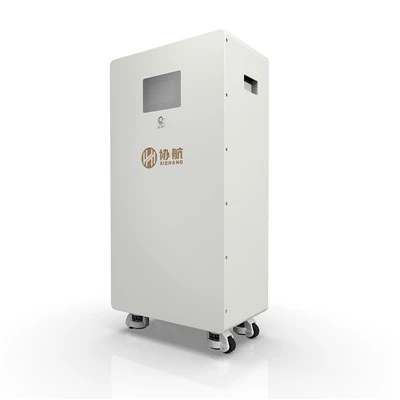
If you want to learn more about how C&I energy storage can work with your distributed generation, don’t hesitate to reach out. We’ve worked with hundreds of C&I facilities across North America, and we can help you conduct an energy audit, design a custom system, and walk through the tax incentives and cost savings. The energy landscape is changing, and combining storage and distributed generation is one of the best ways to stay ahead of rising costs and grid uncertainty. Let’s connect and find the right solution for your business.
Home Energy Storage References
- U.S. Energy Information Administration. (2024). Distributed Generation Market Trends: 2023 C&I Solar Capacity Growth. Washington, DC: U.S. Department of Energy.
- National Renewable Energy Laboratory. (2023). Emissions Reductions from Combined Distributed Generation and Energy Storage Systems. Golden, CO: NREL.
- International Energy Agency. (2024). Time-Shifting Value of C&I Energy Storage Paired with Distributed Renewable Generation. Paris, France: IEA.
- Inflation Reduction Act of 2022, Pub. L. No. 117-169, § 13601. (2022). Washington, DC: U.S. Congress.
- U.S. Department of Energy. (2023). C&I Energy Storage and Microgrid Case Studies: Industrial and Commercial Applications. Washington, DC: DOE.
Zhejiang Xiehang New Energy Equipment Co., Ltd.
As one of the most professional c&i energy storage manufacturers and suppliers in China, our products have good reputation in the market. Please erst assured to wholesale custom made c&i energy storage from our factory. If you have any enquiry about cooperation, please feel free to email us.
Address: No.5 Hechen Road, Zhouwangmiao Town, Haining, Jiaxing City, Zhejiang Province, China
E-mail: dan.wu@xiehang.net
WebSite: https://www.shineonpower.com/
