If you’ve ever stood in front of a fully automated assembly line, watching robots, conveyor belts, and sensor arrays move in perfect sync to package a product or assemble a component, you’ve probably wondered: how do all these different pieces of equipment talk to each other? The magic behind that seamless coordination lies in communication protocols—rule-based systems that let automation hardware “understand” one another, regardless of who manufactured them or when they were built. As someone who’s spent the last 12 years running an automation equipment supply company, I’ve seen first-hand how choosing the right protocol can make or break a project, while picking the wrong one can lead to weeks of downtime, costly rework, and frustrated clients. Let’s break down the most common protocols we recommend to our customers, why they matter, and how we help them select the right fit for their unique operations. Automation Equipment
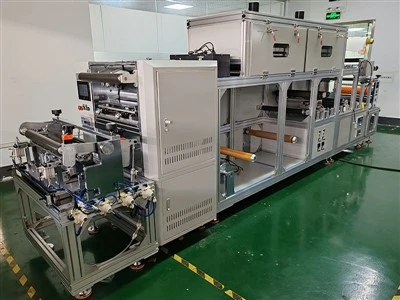
First, it’s important to note that not all protocols are created equal. Some are designed for high-speed, time-critical tasks like robotic arms moving at sub-millimeter precision, while others are better for connecting sensors and controllers across a large factory floor. They’re also tailored to different environments: harsh manufacturing floors with extreme temperatures and electromagnetic interference need protocols that can withstand that noise, while smaller indoor automation setups can use simpler, more flexible options. Over the years, the market has shifted from a handful of proprietary protocols (where one company owned the whole system) to more open standards that let mix-and-match equipment, a change that’s made automation much more accessible for small and medium-sized businesses, too.
Let’s start with one of the most ubiquitous protocols in industrial automation: Modbus. If you’re new to the space, Modbus is probably the first protocol you’ll hear about, and for good reason. Developed in 1979 by Modicon (now part of Schneider Electric), Modbus is an open, standard protocol that works across nearly every type of automation hardware. It’s simple, reliable, and doesn’t require specialized hardware to implement—most controllers, sensors, and even older legacy equipment have Modbus ports built in. We use Modbus all the time for our smaller-scale projects, like packaging lines or conveyor systems where data transfer speeds don’t need to be super fast. For example, a client in the food and beverage industry reached out to us last year, needing to upgrade a 10-year-old bottling line without replacing any of their existing pressure sensors and flow meters. We integrated Modbus RTU (the serial version of Modbus) to connect the old sensors to a new PLC, and it took less than a day to set up—no custom coding, no expensive upgrades. The biggest downside of Modbus is that it’s not the fastest: it tops out at around 1 Mbps for serial Modbus, and while Modbus TCP/IP (which runs over Ethernet) can go up to 1 Gbps, it’s not optimized for time-sensitive tasks. So Modbus is great for basic data collection and low-speed control, but not ideal for high-precision robotics.
Next up, EtherCAT is the workhorse for high-performance automation. EtherCAT (Ethernet for Control Automation Technology) was developed by Beckhoff in the early 2000s, and it’s become the go-to protocol for applications that need microsecond-level precision. Unlike standard Ethernet, where data is sent from one device to the next in a linear chain, EtherCAT processes data as it passes through each node, which means it can sync hundreds of devices with a latency of less than 1 microsecond. That’s a game-changer for things like robotic pick-and-place systems, laser cutting machines, or any operation where timing is everything. We installed an EtherCAT-based system for a automotive parts manufacturer last year, where six robotic arms had to work in perfect tandem to weld undercarriage components. Before, their old system had 2-3 milliseconds of lag, which caused misalignments and scrap parts. After switching to EtherCAT, the lag dropped to less than 500 nanoseconds, and their scrap rate fell by 12% within the first month. What we love most about EtherCAT is its flexibility: it can run over standard Ethernet cables, so we don’t have to bring in special wiring, and it supports thousands of I/O points across a single network. The only tradeoff is that it’s a bit more complex to configure than Modbus, so we always provide on-site training for our clients to make sure their teams can troubleshoot minor issues on their own.
Another protocol we use frequently is PROFINET, which stands for Process Field Network. Developed by Profibus and Profinet International, PROFINET is an open standard that’s widely used in European manufacturing, and it’s been growing in popularity in North America over the last decade. What sets PROFINET apart is its support for three different types of communication: cyclic data exchange for real-time control (similar to EtherCAT), acyclic data exchange for configuration and diagnostics, and isochronous real-time (IRT) for the most time-critical tasks, like motion control. It’s highly compatible with most major automation brands, so if a client has a mix of Siemens, Allen-Bradley, and our own equipment, PROFINET can connect them all seamlessly. We worked with a pharmaceutical company last year that needed to set up a new blister packaging line, where speed and precision were critical to meeting FDA regulatory requirements. We chose PROFINET because it offers built-in diagnostic tools that let us track every device’s performance in real-time, which made it easy to document for audits. The system can handle up to 10,000 I/O points, so it’s scalable for both small and large operations, and it works with standard Ethernet hardware, so there’s no extra cost for specialized components. One thing to note: while PROFINET is open, some of its advanced features require specific hardware, so we always make sure to clarify that with clients during the quoting process.
If your operation is focused on process automation rather than discrete manufacturing—think oil and gas, water treatment, or chemical plants—then OPC UA is likely the protocol you’ll need. OPC (Open Platform Communications) UA (Unified Architecture) is more than just a communication protocol; it’s a framework that lets different systems share data securely across networks, even over the internet. Unlike the older OPC DA (Data Access) protocol, which only worked on local networks, OPC UA is designed for cross-platform, cross-location communication. That means a plant manager can check sensor data from a water treatment facility located 500 miles away, right from their office computer, or even their phone. We recently helped a municipal water district upgrade their monitoring system, where they have three treatment plants spread across a 70-mile area. The old system used separate protocols for each plant, so operators had to log into three different dashboards to check data. We implemented OPC UA to connect all three plants to a central SCADA system, so now they can view real-time water quality data, pressure levels, and pump status from one interface. OPC UA also has built-in security features, like encryption and user authentication, which is non-negotiable for industries handling sensitive data or operating in critical infrastructure. The biggest advantage for our clients is that OPC UA works with almost every protocol out there, so it acts as a translator between different systems, eliminating the need for expensive custom integration.
For smaller, more remote operations—like a farm’s automated irrigation system or a small warehouse’s inventory tracking—we often recommend LoRaWAN. Wait, you might be thinking: LoRaWAN is for IoT, not industrial automation? Well, that’s changing. LoRaWAN (Long Range Wide Area Network) is a low-power, long-range protocol that’s perfect for connecting sensors over large distances with minimal battery usage. For example, if a client has a 100-acre farm with soil moisture sensors spread across the field, LoRaWAN lets those sensors send data to a central controller without the need for wiring, which would be costly to install and maintain. We recently worked with a large agricultural client who wanted to automate their irrigation system, and LoRaWAN was the perfect fit because it can cover several miles with a single gateway, and the sensors can run on batteries for up to 10 years. It’s also low-power, so it doesn’t add to the client’s operational costs. The tradeoff is that LoRaWAN has lower data transfer speeds than industrial Ethernet protocols, so it’s only good for sending small amounts of data—like sensor readings or status updates—not for controlling high-speed machinery. So it’s not a replacement for protocols like EtherCAT or PROFINET, but it’s a great complementary protocol for remote monitoring and control in larger, spread-out operations.
Now, I want to talk about something I see a lot of clients struggle with: choosing the wrong protocol because they’re focused on short-term cost instead of long-term scalability. Last year, we had a small manufacturing client who tried to save money by using a cheap, proprietary protocol for their new assembly line. Six months later, they wanted to add a new robotic arm, but the protocol was only compatible with robots from that specific manufacturer, and the robot was 30% more expensive than a third-party option. They also couldn’t integrate their existing quality control sensors, so they had to replace those, too, which ended up costing twice as much as if they’d chosen an open protocol in the first place. That’s why, as a supplier, we don’t just sell equipment—we work with clients to assess their current needs and future goals before recommending a protocol. We ask questions like: how big is your operation now? Do you plan to expand in the next 5 years? What kind of data do you need to collect? Do you need remote access? What are your latency requirements? These questions help us narrow down the best protocol, and we always prioritize open standards when possible, because they give clients the flexibility to upgrade or change equipment without being locked into a single vendor.
Another thing to consider is cybersecurity, which has become a huge concern in automation over the last few years. Industrial systems are now connected to the internet for remote monitoring and control, which makes them vulnerable to cyberattacks. That’s why protocols like OPC UA and PROFINET have built-in security features, while older protocols like Modbus RTU don’t have much native security. We always advise clients to implement additional security measures, like firewalls, network segmentation, and regular updates, but choosing a protocol with strong security is a critical first step. For example, if a client is in the energy sector, we’ll never recommend an older, unsecure protocol because of the risk of a breach that could cause costly downtime or safety hazards.
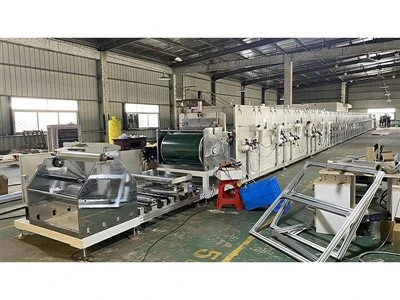
At the end of the day, the communication protocol you choose is the backbone of your automation system. It’s what lets your machines work together, collect data, and adapt to changing needs. As an automation equipment supplier, our job isn’t just to sell you the best robots or PLCs—it’s to make sure those pieces work together seamlessly. We’ve seen countless projects succeed because of the right protocol, and fail because of a last-minute choice to go with a cheaper or less compatible option. If you’re planning an automation project, whether it’s a small conveyor line or a large multi-plant system, we’d be happy to walk you through your options, assess your unique needs, and help you find the solution that works for you. Don’t let bad communication protocols hold your operation back—reach out to discuss your project today.
Laboratory Equipment References
- Engineering Toolbox. "Industrial Communication Protocols: A Guide for Automation."
- Profibus and Profinet International. "PROFINET Technical Overview."
- Beckhoff Automation. "EtherCAT Technology and Applications in Industrial Automation."
- OPC Foundation. "OPC UA Specification Part 1: Concepts and Overview."
- LoRa Alliance. "LoRaWAN for Industrial Automation Use Cases."
- Schneider Electric. "Modbus Protocol Implementation and Best Practices."
Dongguan Innate Intelligent Technology Co., Ltd.
With abundant experience, we are one of the most professional automation equipment manufacturers in China. With a professional production team, we are able to meet the needs of the majority of our customers. Please feel free to buy advanced automation equipment made in China here from our factory. Customized orders are welcome.
Address: Room 201, Building 4, No. 92, Fenghuang Road, Dalingshan Town, Dongguan City, Guangdong Province
E-mail: 13316631159@163.com
WebSite: https://www.getinnater.com/
